



Now facing a major turning point, we explore the future of French commercial areas. These spaces, created to meet consumer and accessibility needs, must now play a role in urban transition issues: diversity, nature in the city, soft mobility, citizen participation… All these levers pave the way for a real transformation.
Embracing diversity to revitalize commercial areas
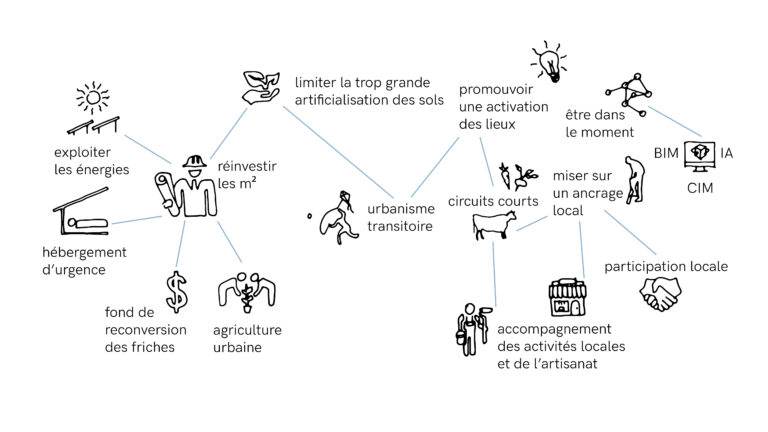
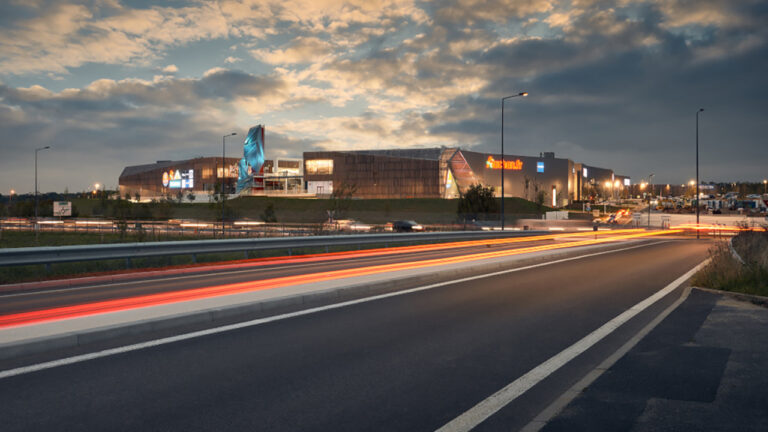
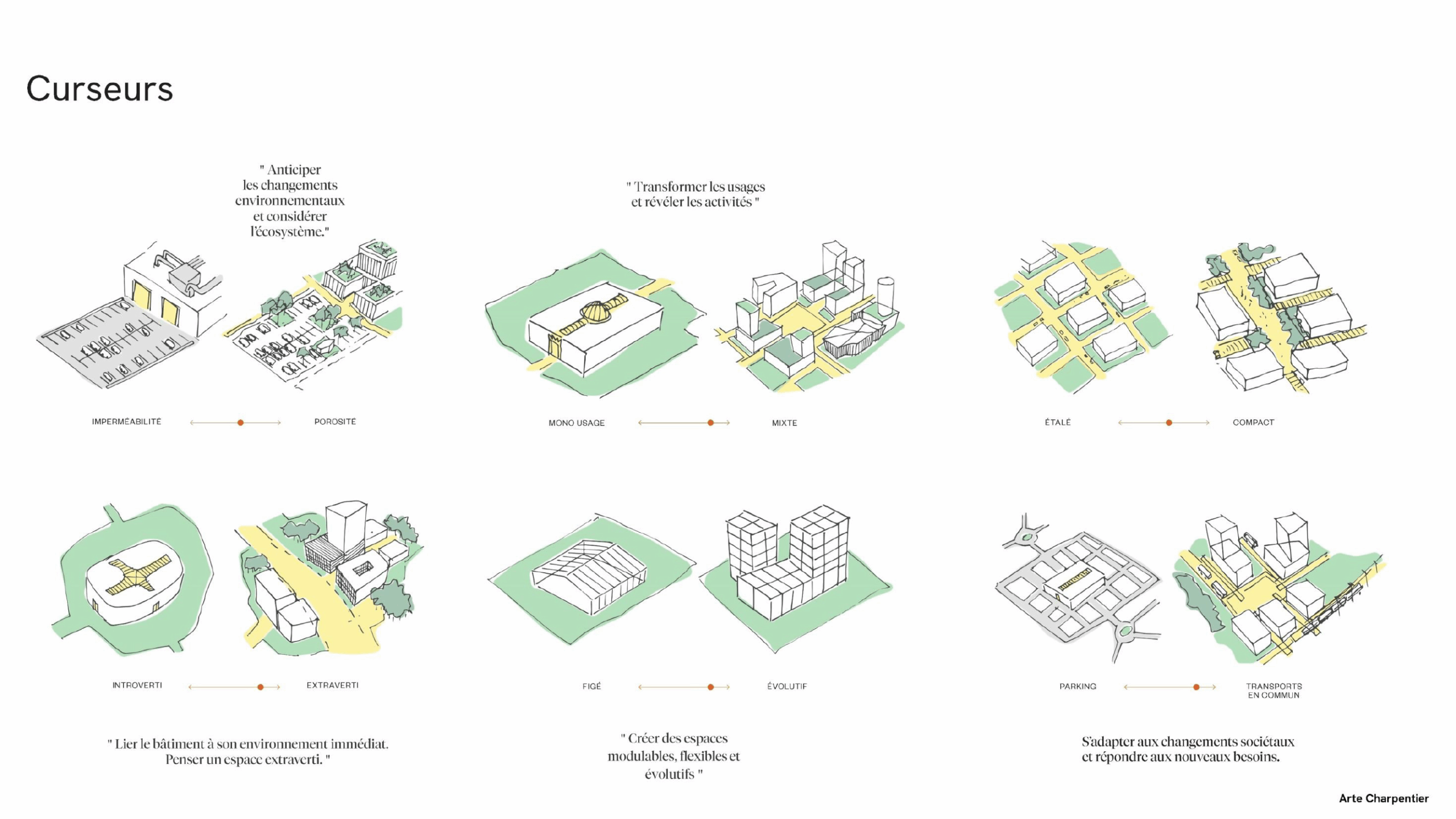
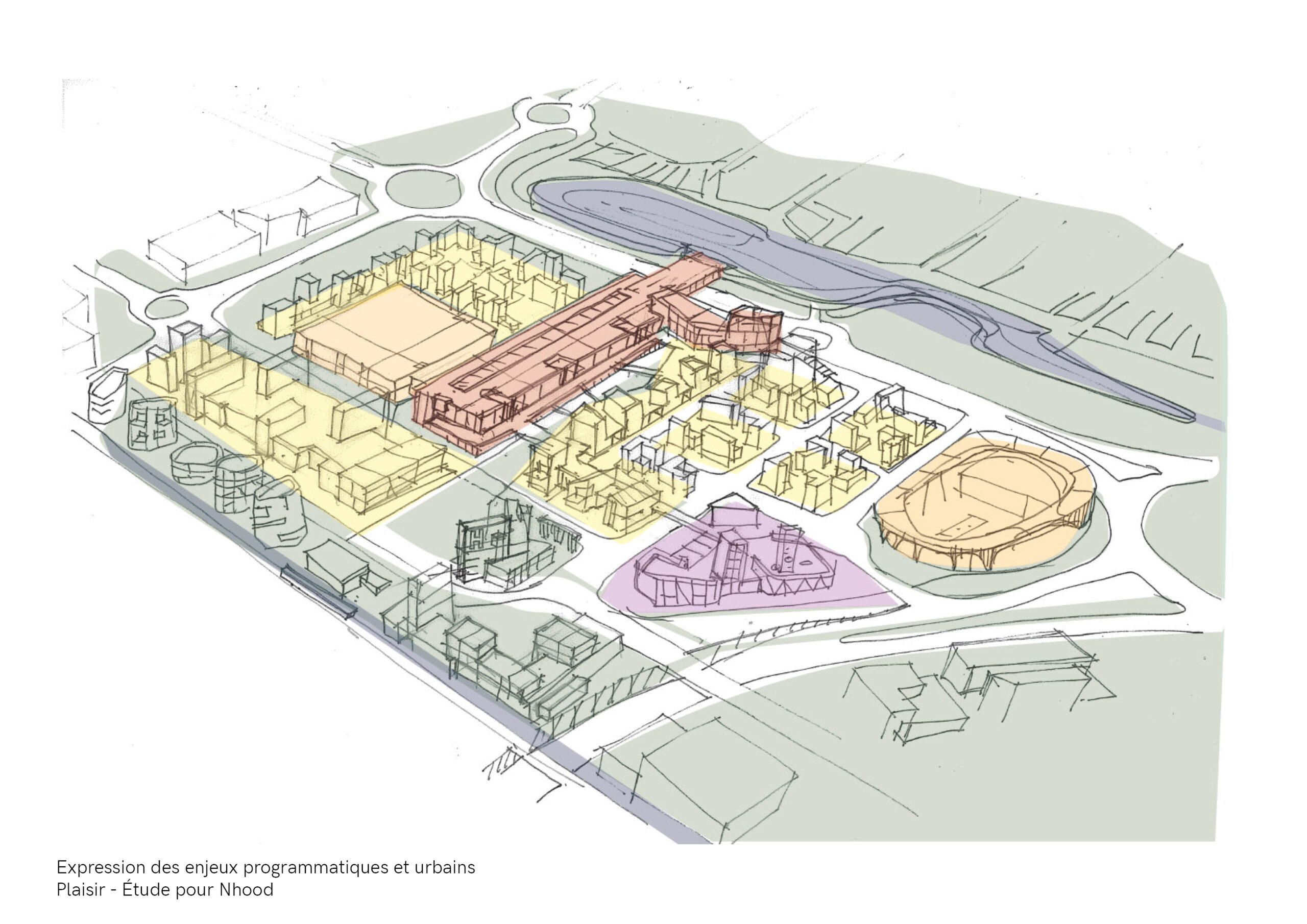
Commercial areas have long been thought of as single-purpose spaces, dedicated almost exclusively to shopping. To support their transformation, we advocate an approach based on mixed use, a real driver of attractiveness and quality of life.
Transforming these spaces into complete urban neighborhoods—integrating housing, shops, activities, leisure facilities, and services—allows them to reconnect with the daily lives of residents. Diversity creates livelier, more resilient places that are better integrated into the surrounding areas. It thus meets both social needs and sustainability requirements.
Restoring nature to its rightful place
The time for large mineral slabs and huge impermeable parking lots is over.
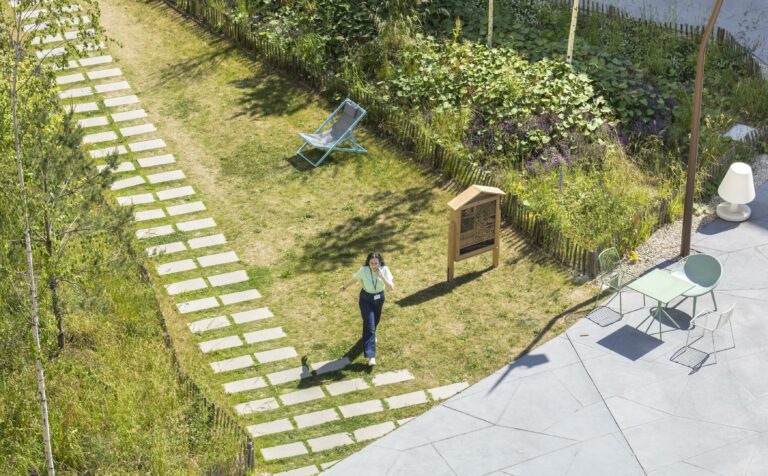
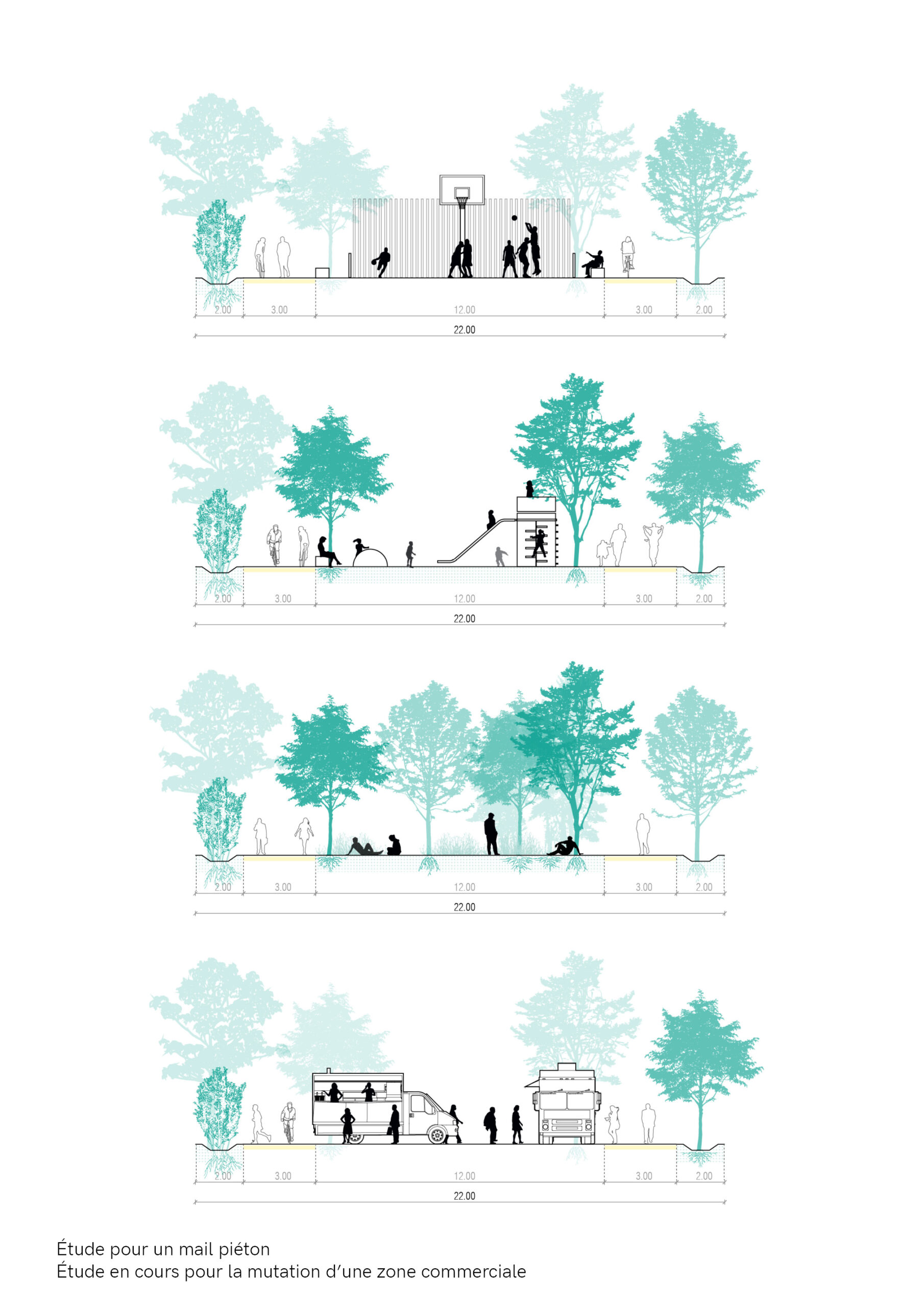
The transformation of commercial areas involves ambitious renaturation, which aims to improve both environmental performance and well-being.
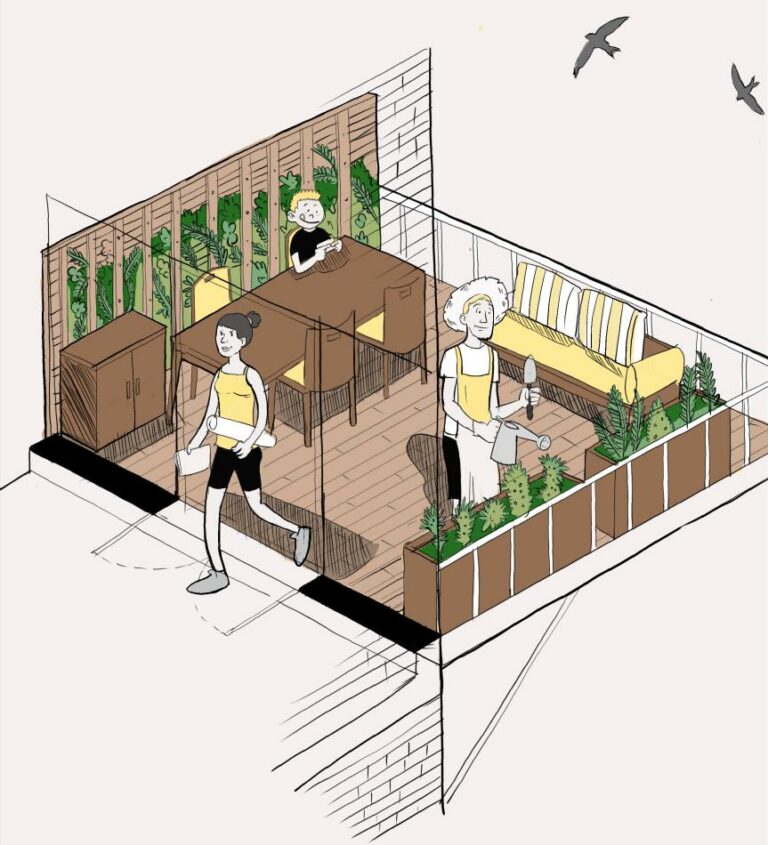
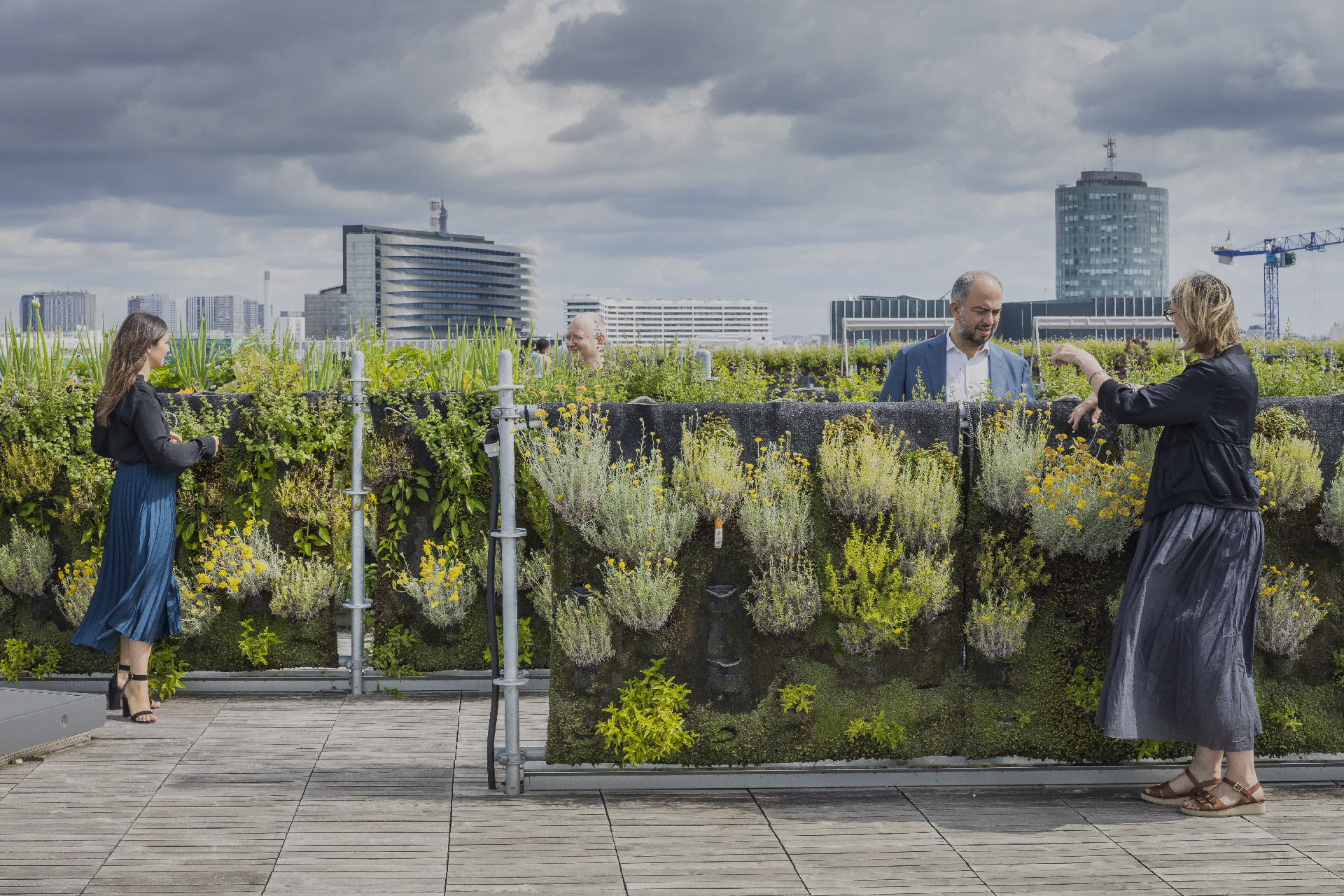
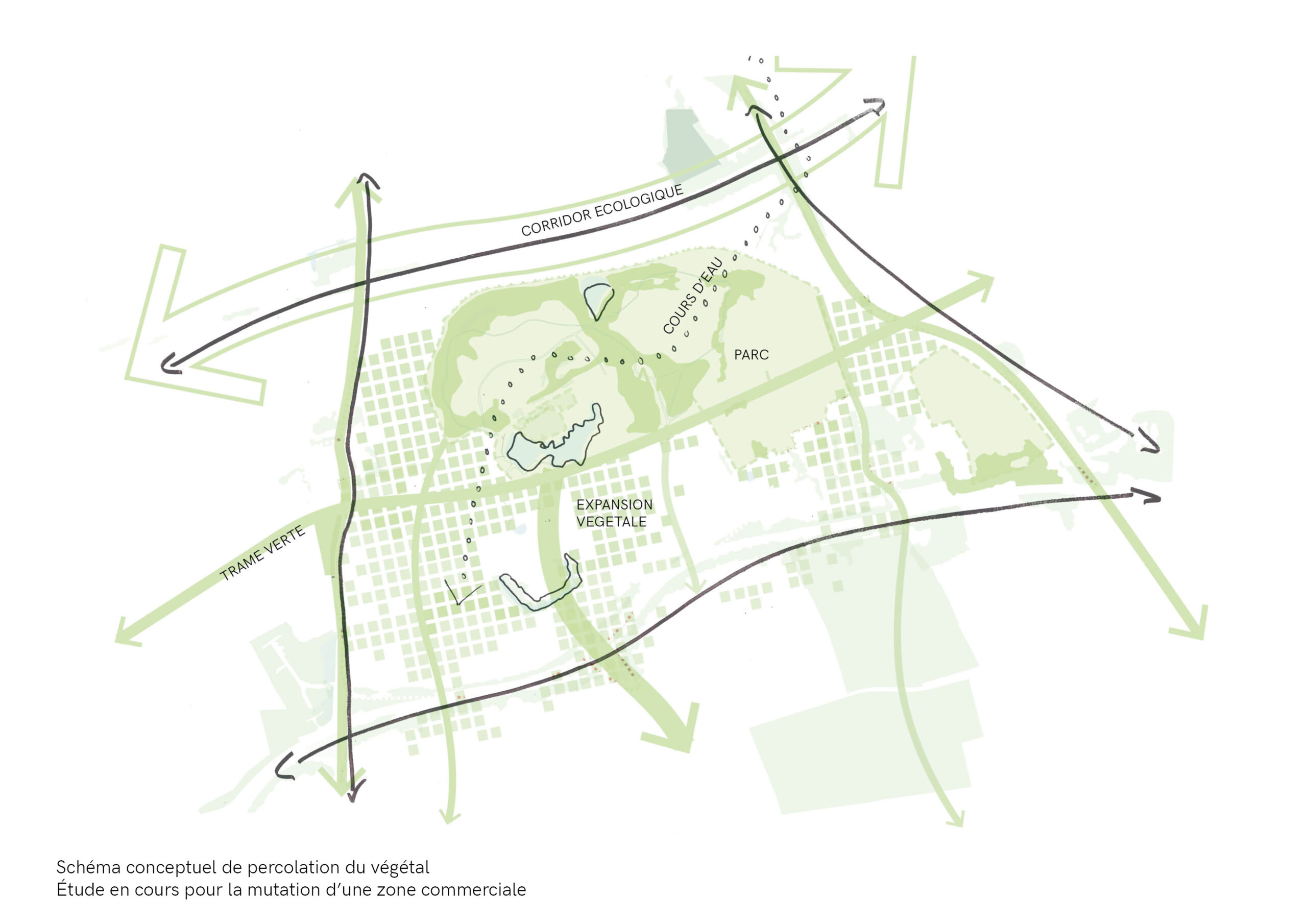
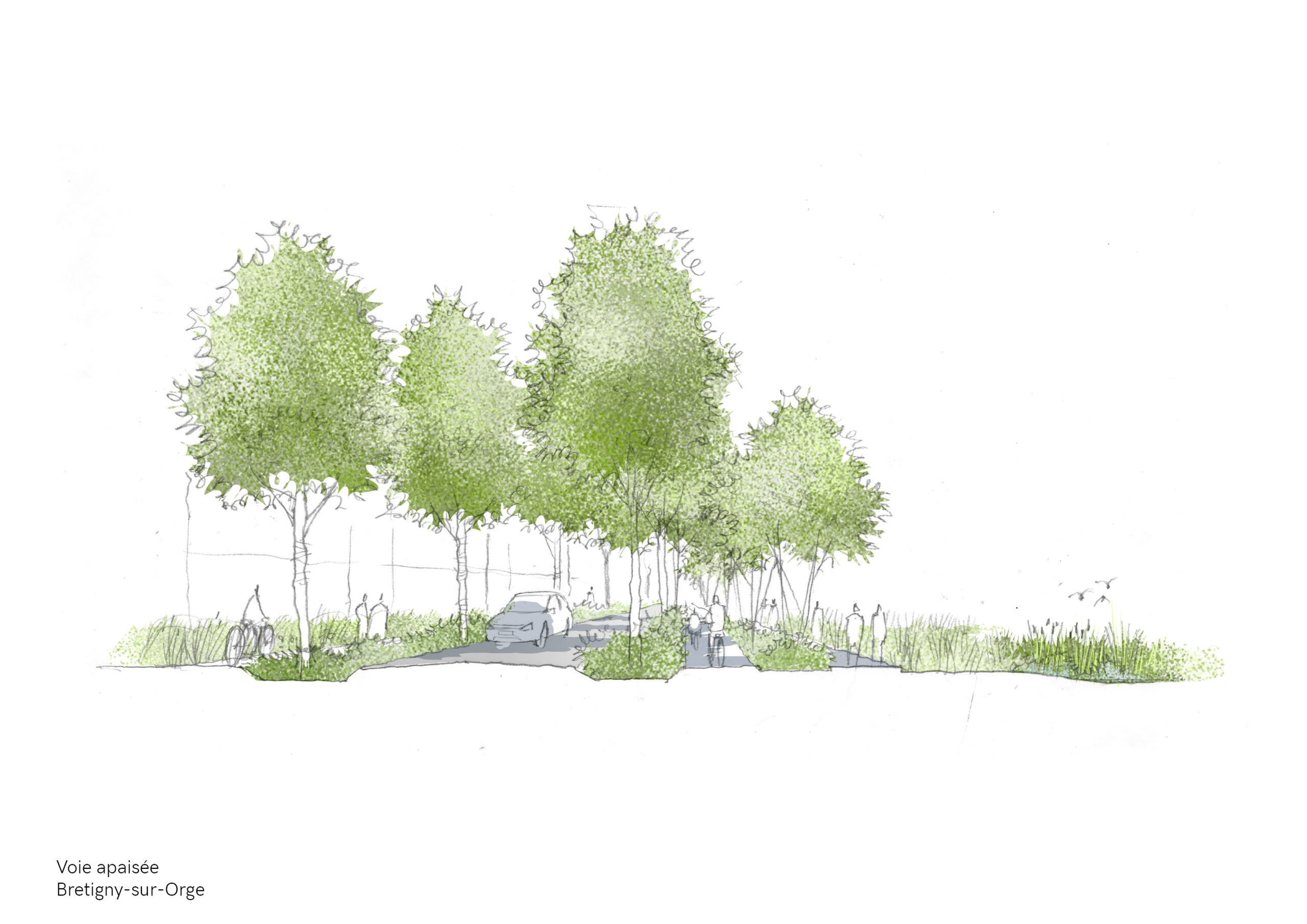
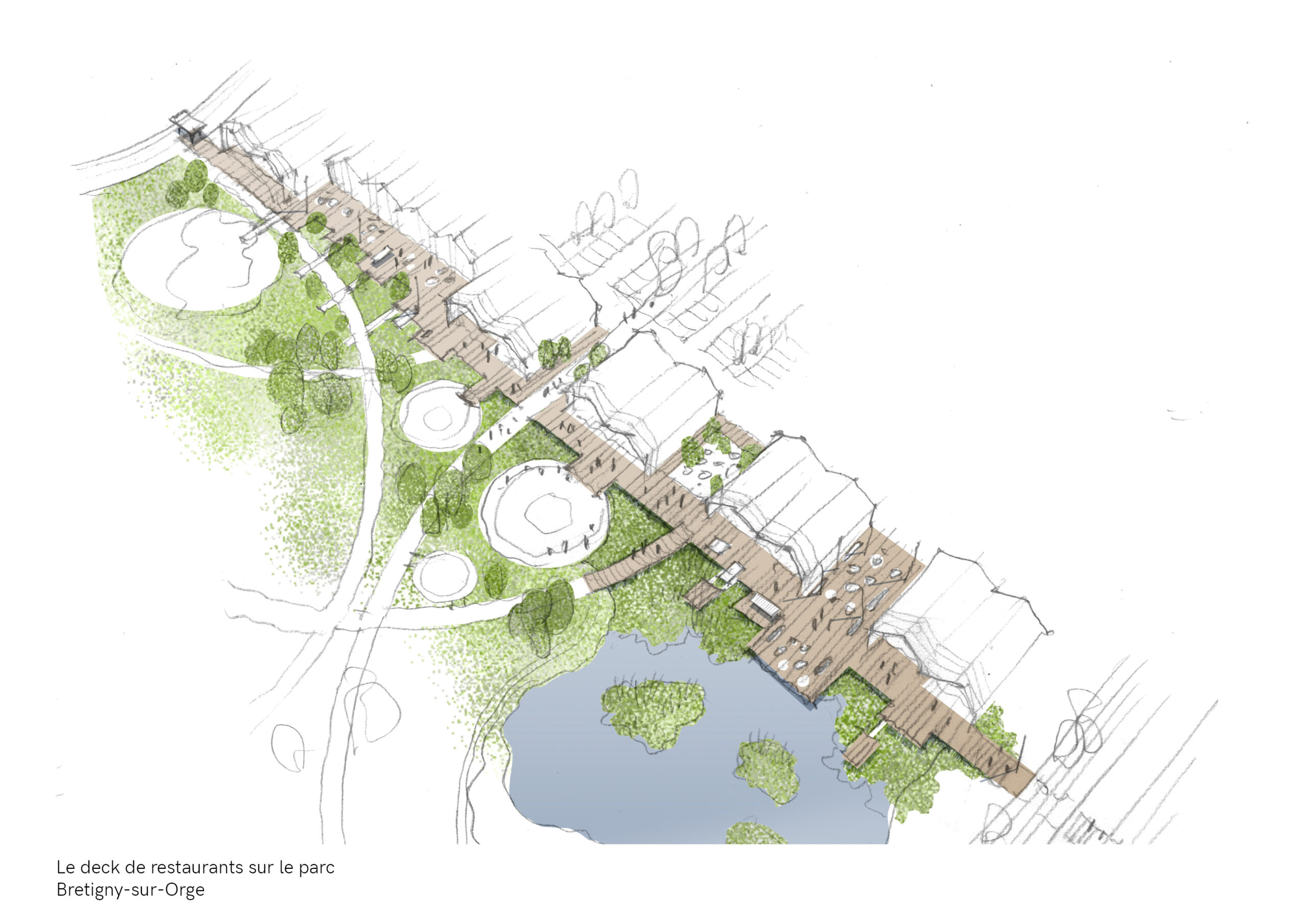
De-impermeabilization, public gardens, biodiversity, green corridors: the integration of nature is becoming a comprehensive urban strategy, providing islands of freshness, improving air quality, reducing runoff, and creating new social uses. Shared gardens, urban agriculture, and spaces for relaxation and socializing help to create peaceful, inclusive, and vibrant places.
Promoting sustainable mobility and accessibility
The future of commercial areas depends on their ability to offer sustainable accessibility.
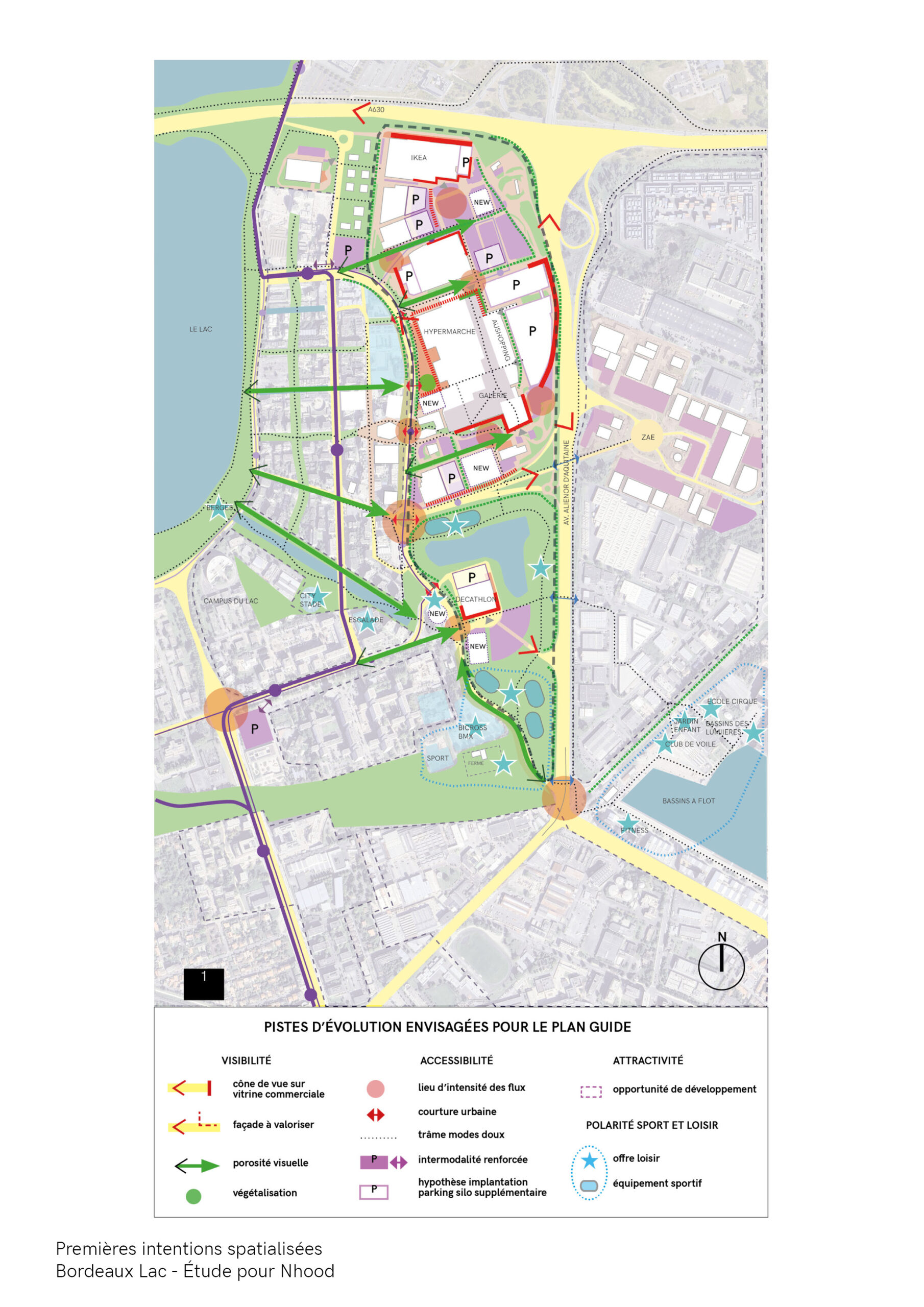
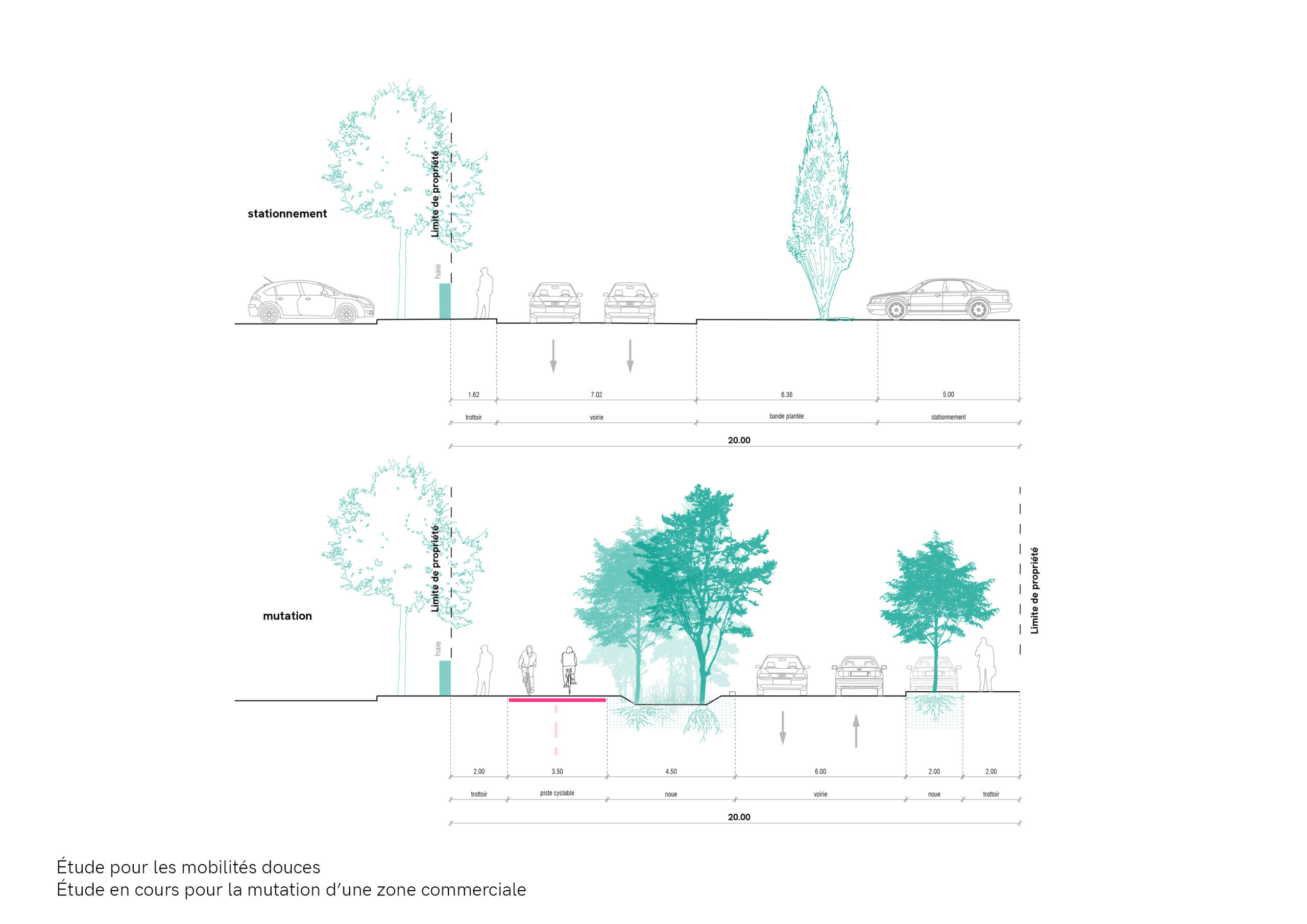
Reducing dependence on private cars requires a fundamental rethink of traffic flows, connections with neighboring neighborhoods, and the permeability of the site.
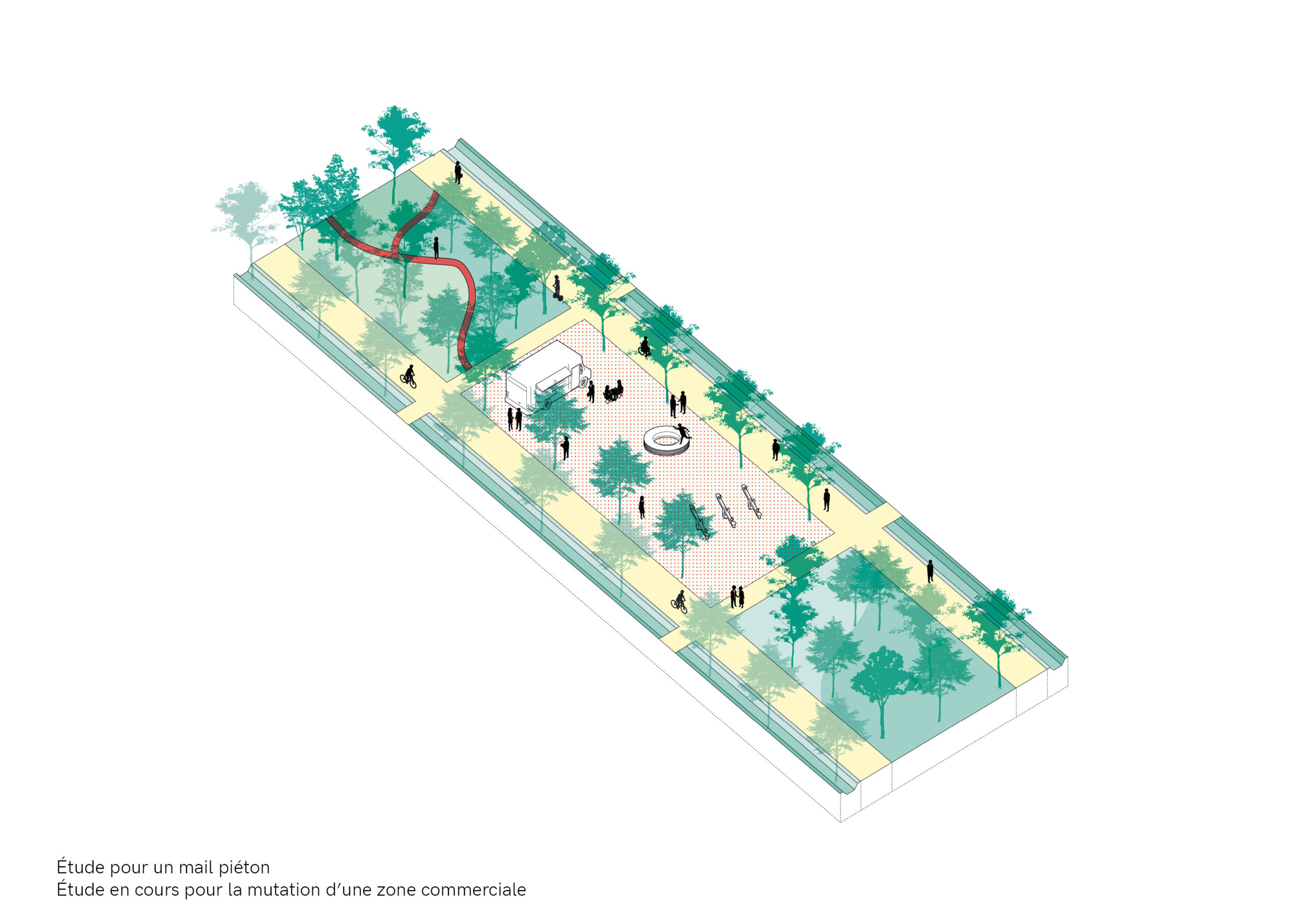
Our projects reorganize travel around active modes of transportation – walking, cycling -and strengthen connections with public transportation. This makes public spaces safer, more pleasant, and more conducive to everyday life. This is an essential condition for turning these areas into true urban extensions.
Transforming through consultation and co-construction
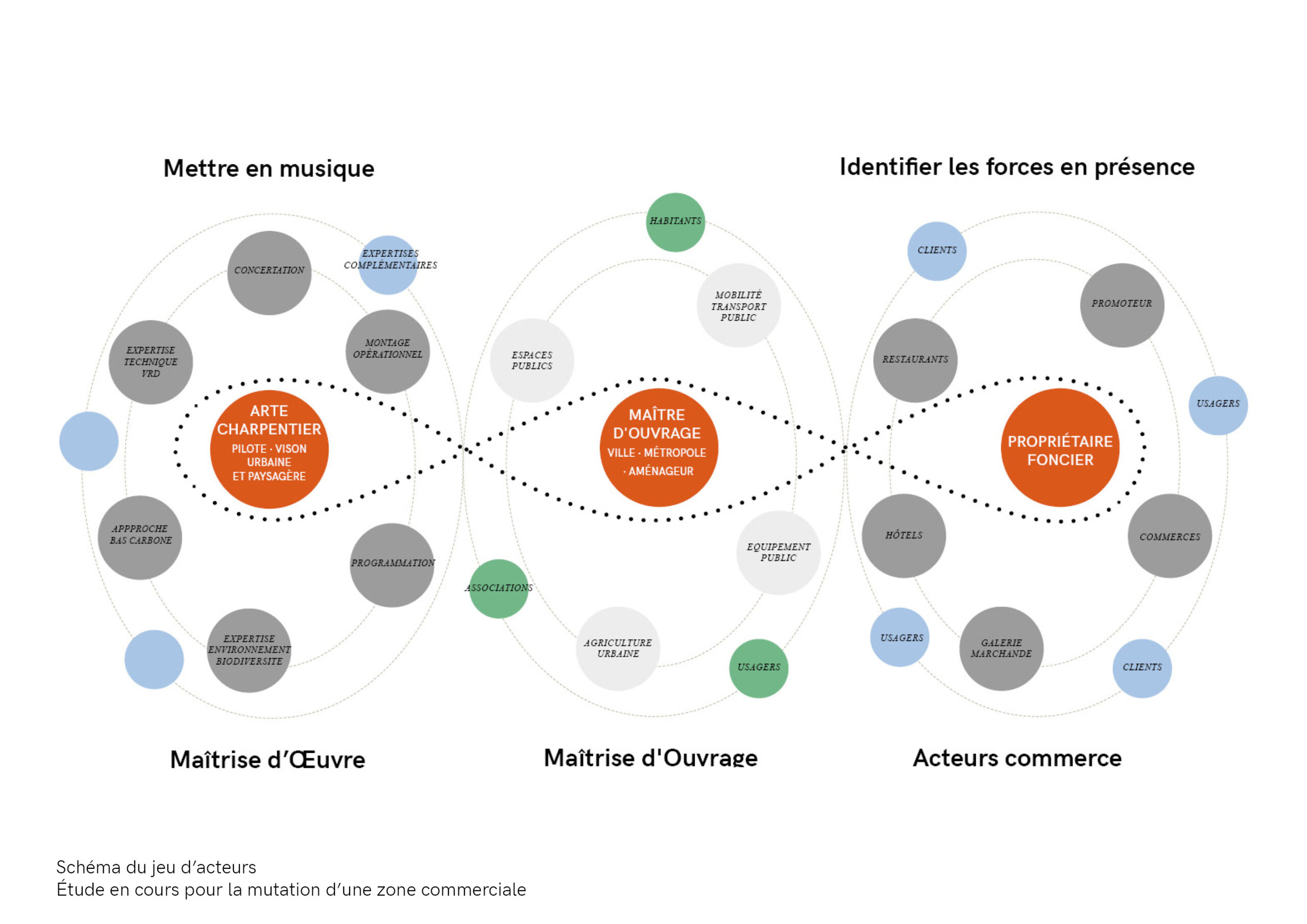
The transformation of commercial areas can only succeed through a collective and ongoing approach. Residents, retailers, elected officials, operators, owners: each stakeholder has a part to play in the solution.
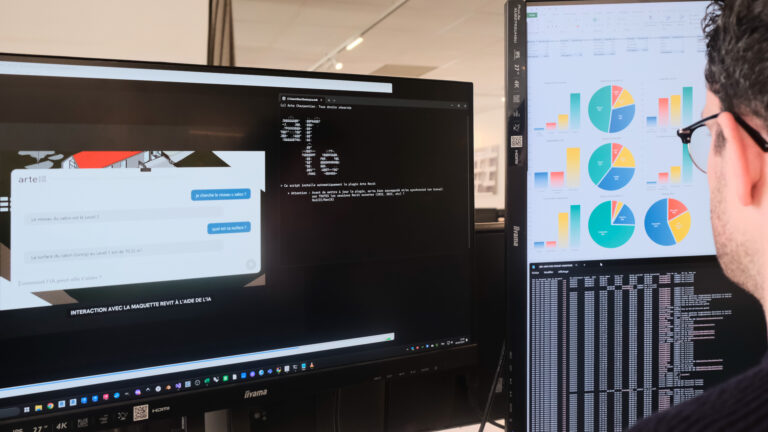
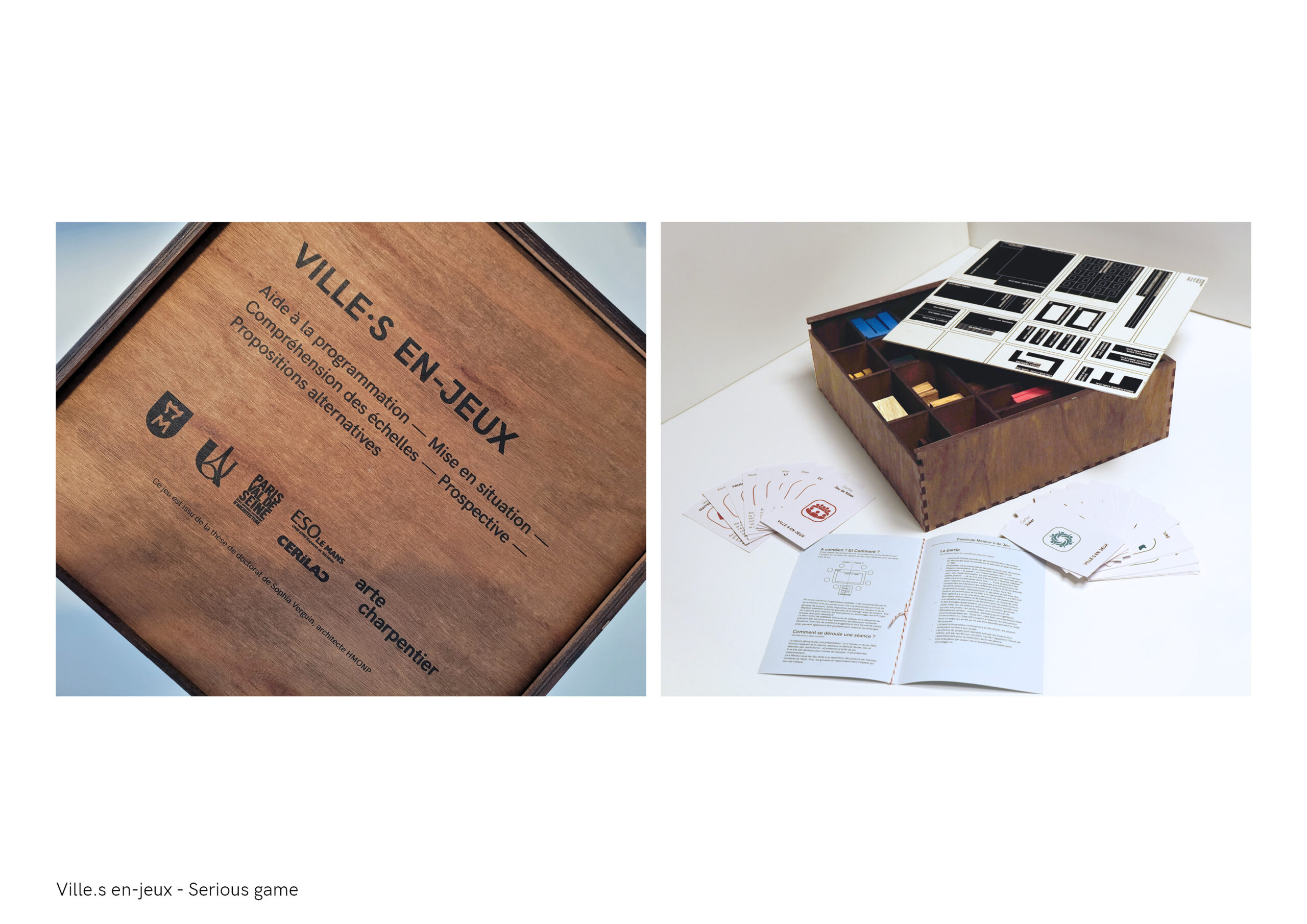
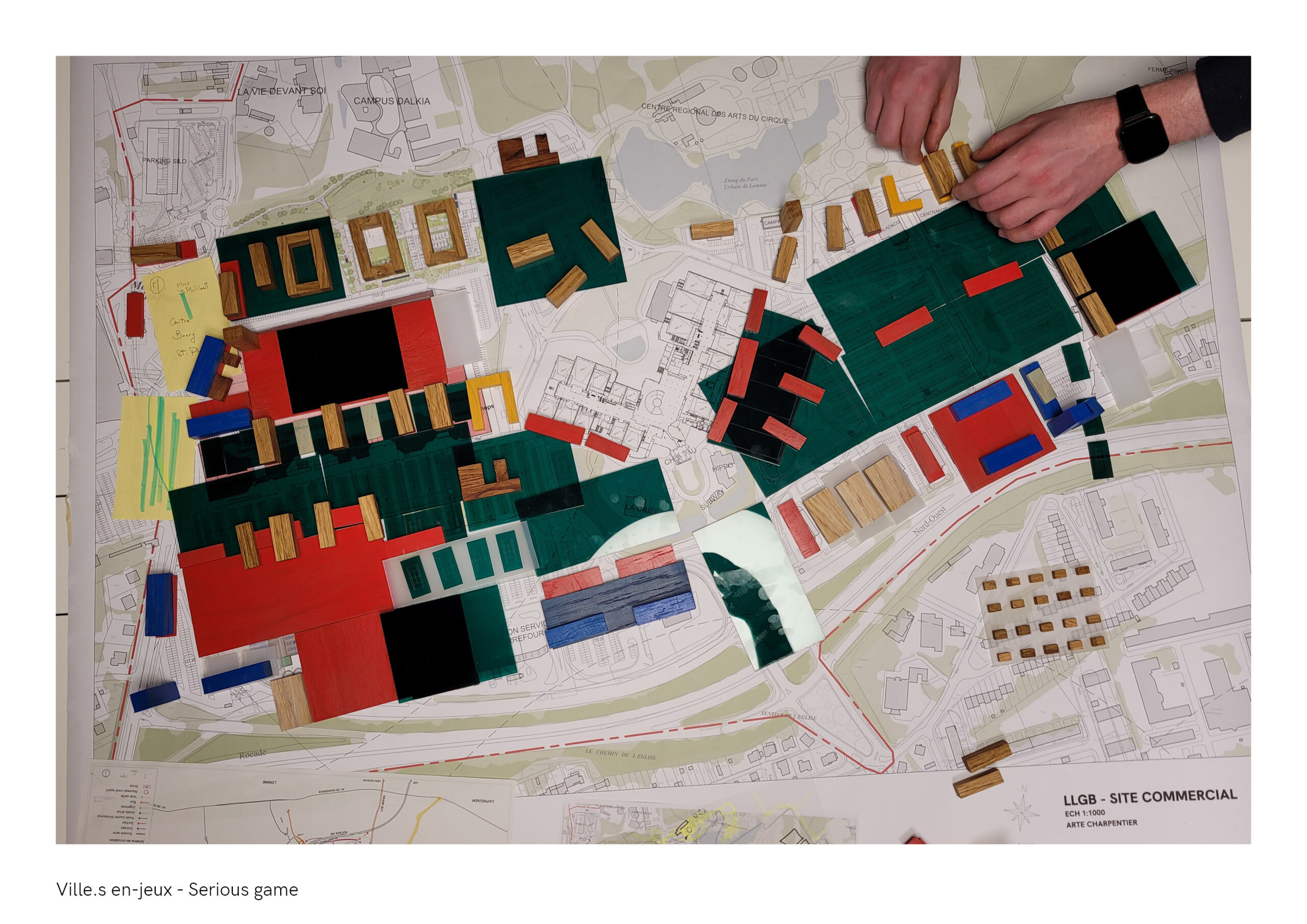
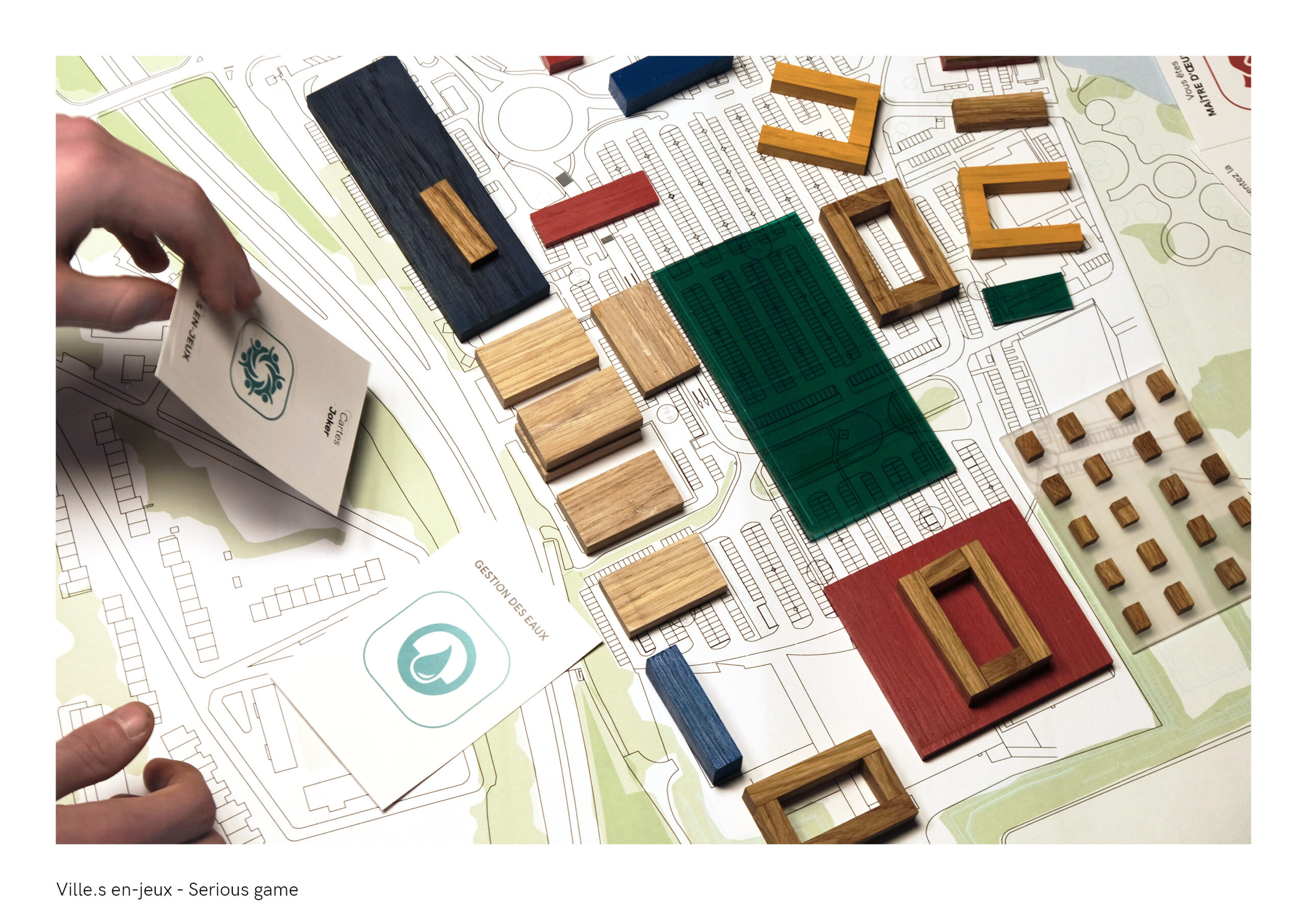
To support this momentum, we are mobilizing innovative tools, such as the serious game “Villes En-jeux”, developed with Sophia Verguin, Doctor of Urban Planning and Development and CIFRE Arte Charpentier. This tool promotes dialogue, mutual understanding, and projection into shared urban futures.
Negotiated urban planning therefore appears to be a decisive lever for ensuring operational feasibility, the transformation schedule, and everyone’s support.
Inventing a new urbanity
Transforming commercial areas means, above all, reinventing the way we live in cities.
These spaces offer an opportunity to create a new urbanity based on:
- the hybridization of commercial centers and new uses;
- more human and user-friendly urban morphologies;
- a central place given to nature as the matrix of the project;
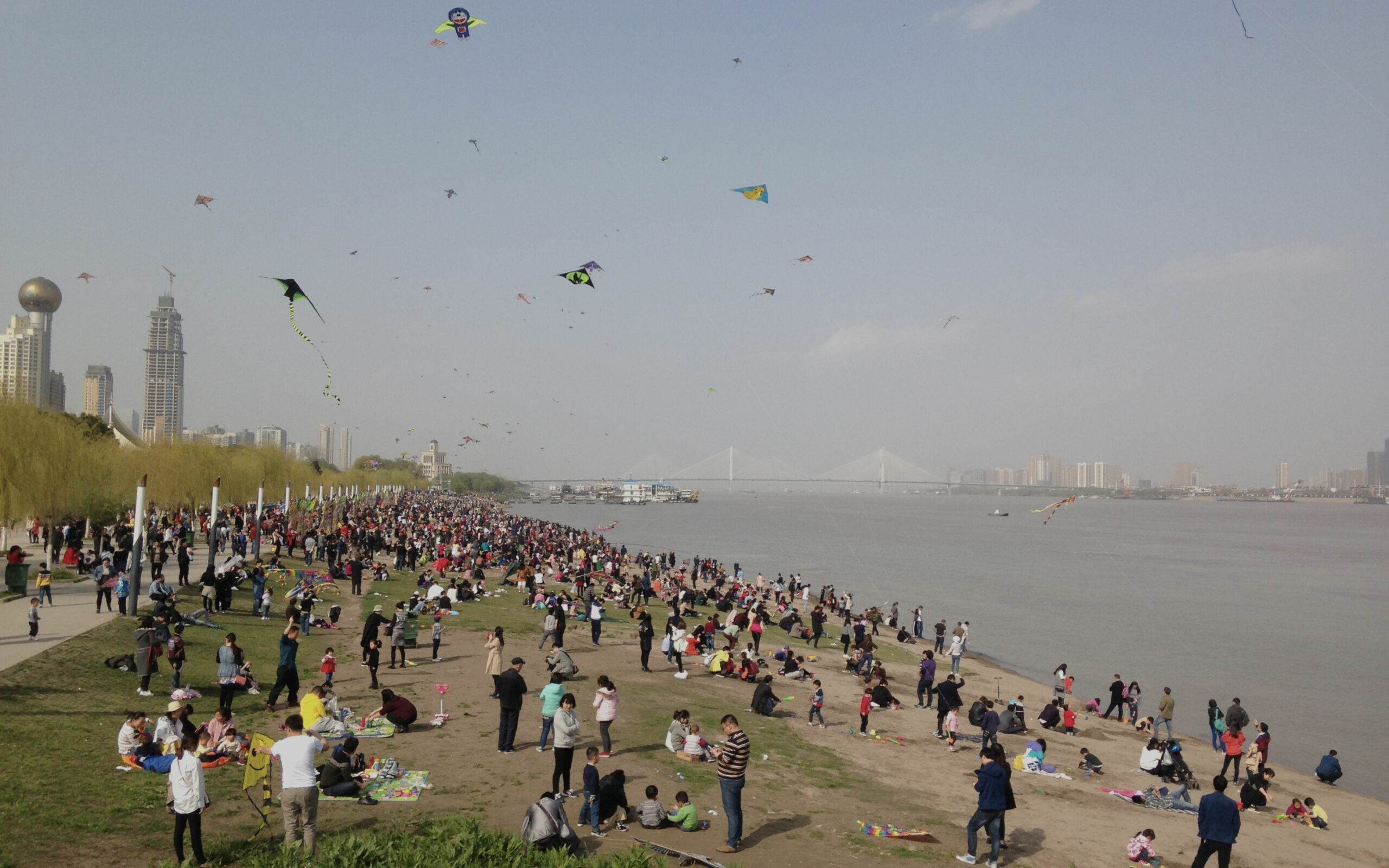
- public spaces designed for social interaction and cohesion.
These sites thus become what Sophia Verguin describes as “workshops of urbanity”: laboratories where new urban forms can be experimented with, isolated neighborhoods can be connected, and a more inclusive and resilient diversity of services and uses can be offered.
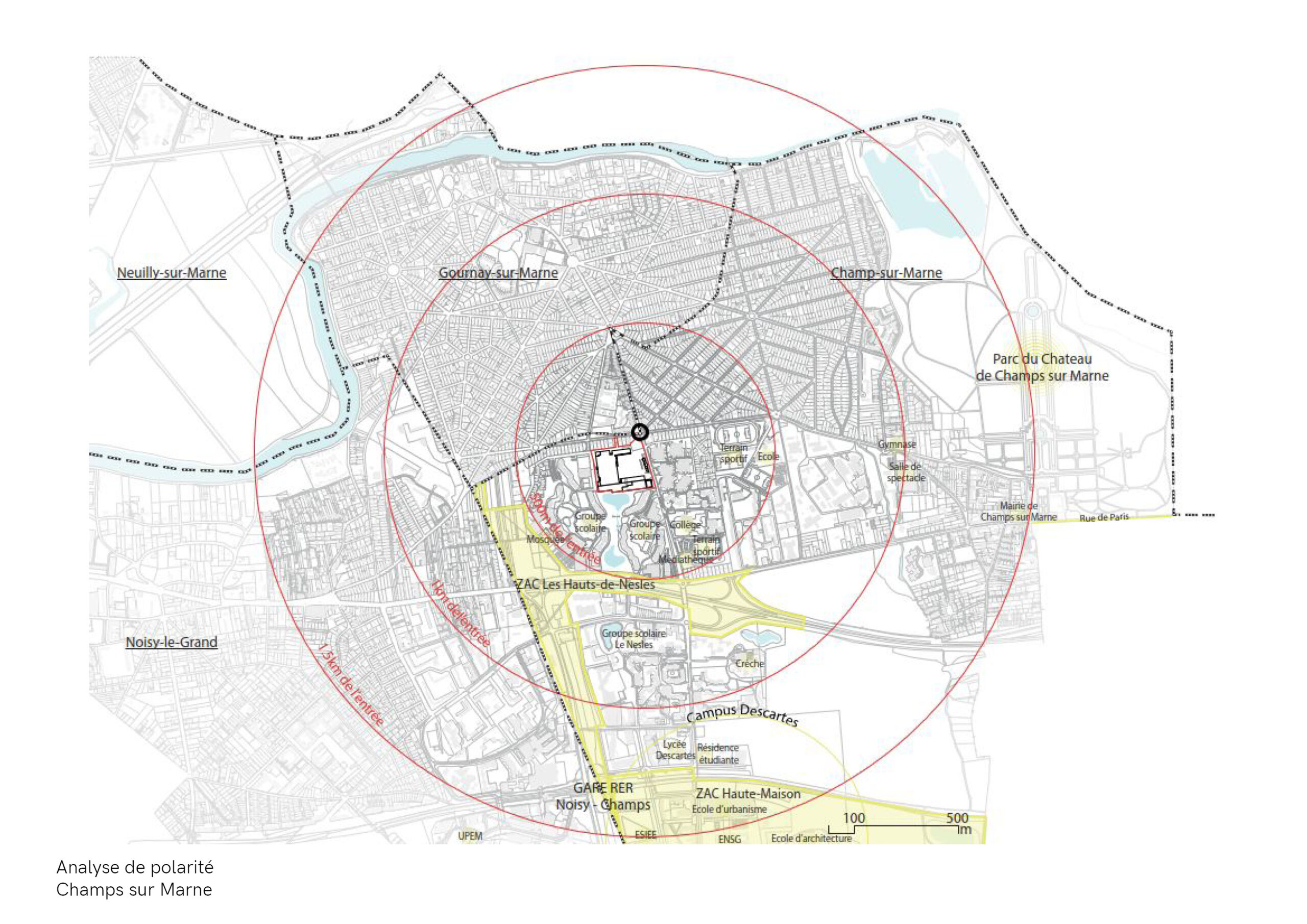
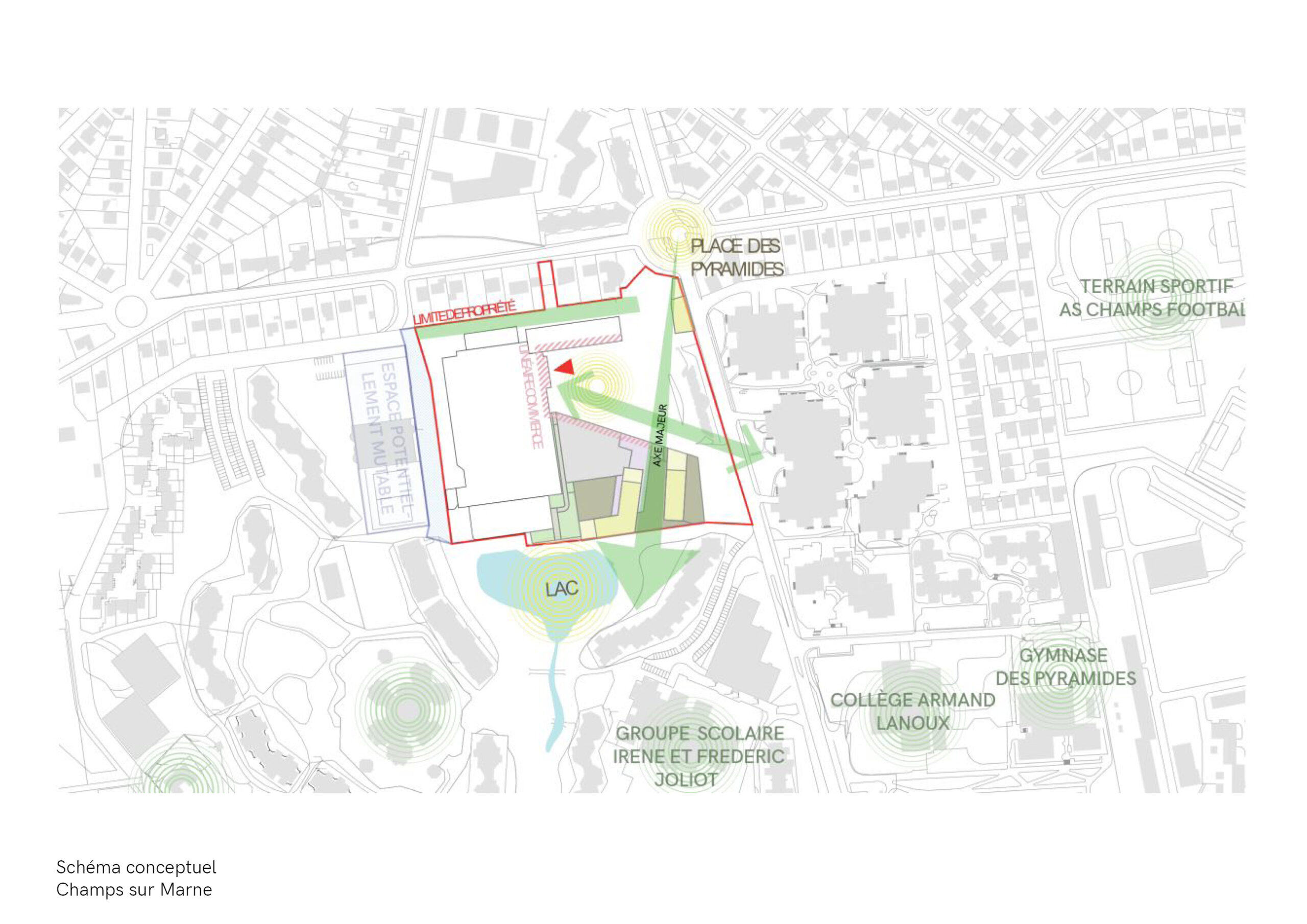
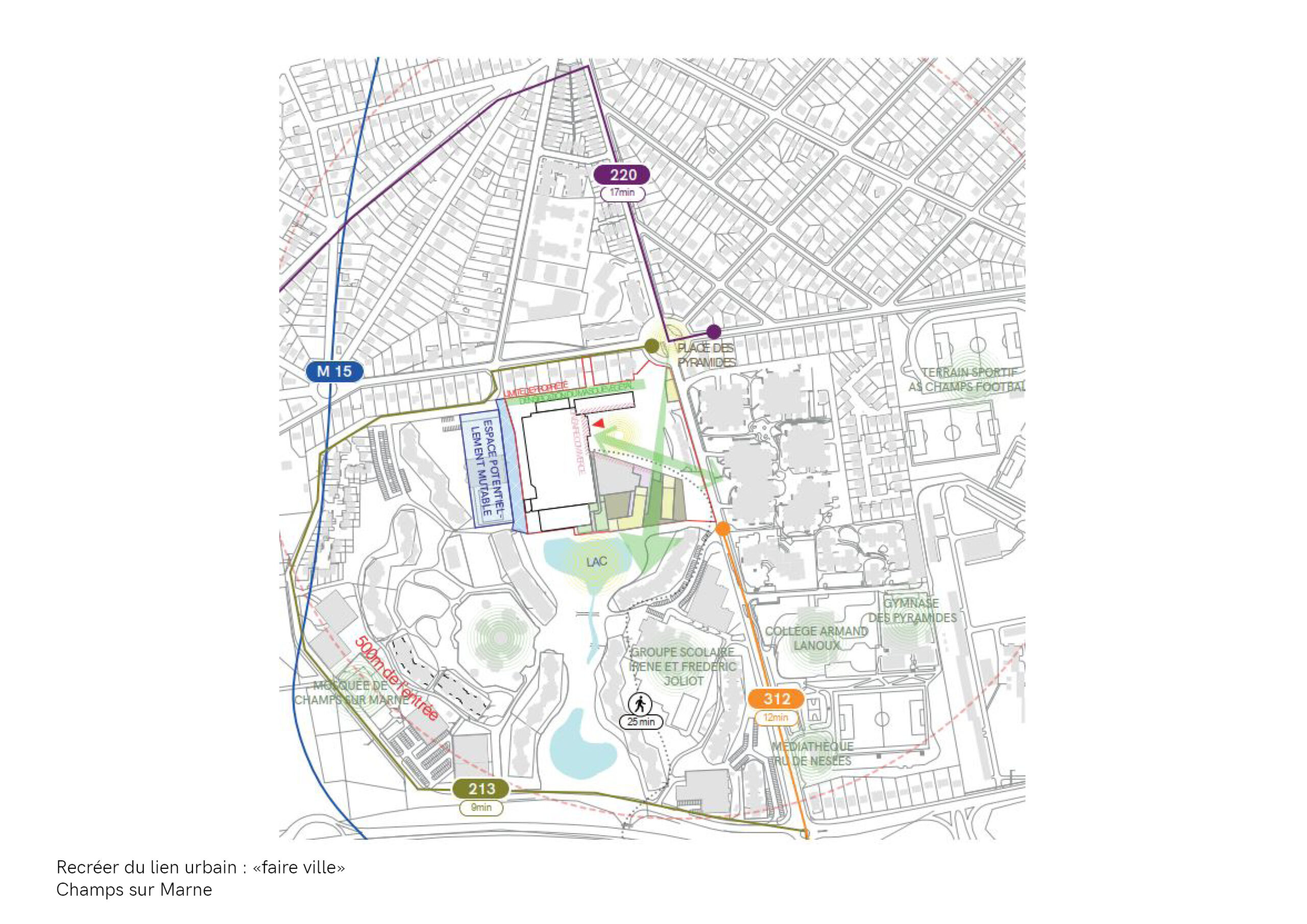
Beyond redevelopment, the transformation of commercial areas reflects a collective ambition: to imagine cities that are more human, more ecological, and more adaptive.
Embracing this new urbanity means recognizing the creativity of territories and the power of co-construction, while placing environmental quality at the heart of every decision.
We are convinced that these spaces, long considered peripheral or single-purpose, can become exemplary areas of urban transition – lively, mixed-use, accessible, and deeply rooted in the needs of residents.
-
Nathalie Leroy Paysage, Associée
Directrice Territoire
FORMATION
Formation La Forêt-Jardin – École de permaculture du Bec Hellouin (2019)
Paysagiste D.P.L.G. – École Nationale Supérieure du Paysage de Versailles
Diplôme de designer textile – École Nationale Supérieure des Arts Décoratifs de Paris
PUBLICATIONS
Participation à l’ouvrage Les 101 mots du paysage, collectif, édition Archibooks, 2017
CONFÉRENCES
Intervention dans le cadre du Module Ville Durable – ESTP, Ecole Spéciale des Travaux Publics
Colloque sur la préservation des sols, octobre 2019 – CEREMA
Vidéo enregistrée pour le SIMI, sur le lien entre les Cycles du Vivant et la ville – CIBI
Animation d’une formation sur la coproduction de la ville avec les habitants. Depuis février 2020 – CADRE DE VIE
JURY
Le Havre, parc sportif paysager de Graville la Vallée