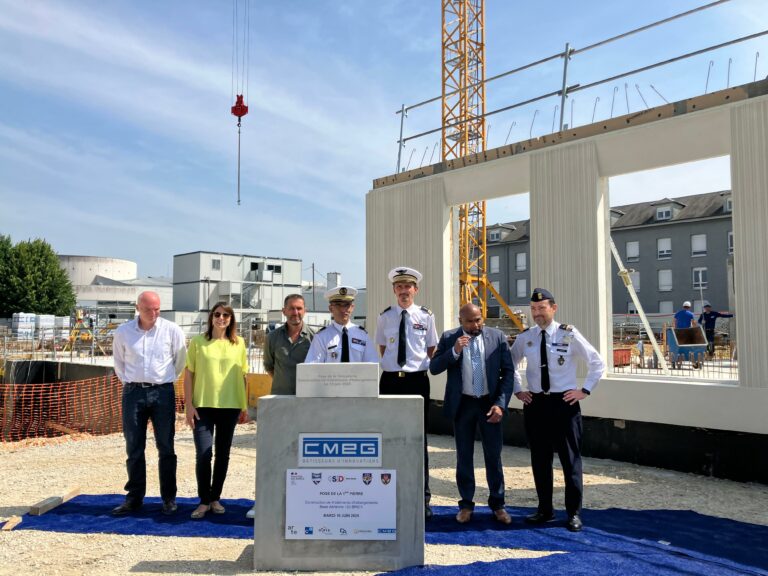


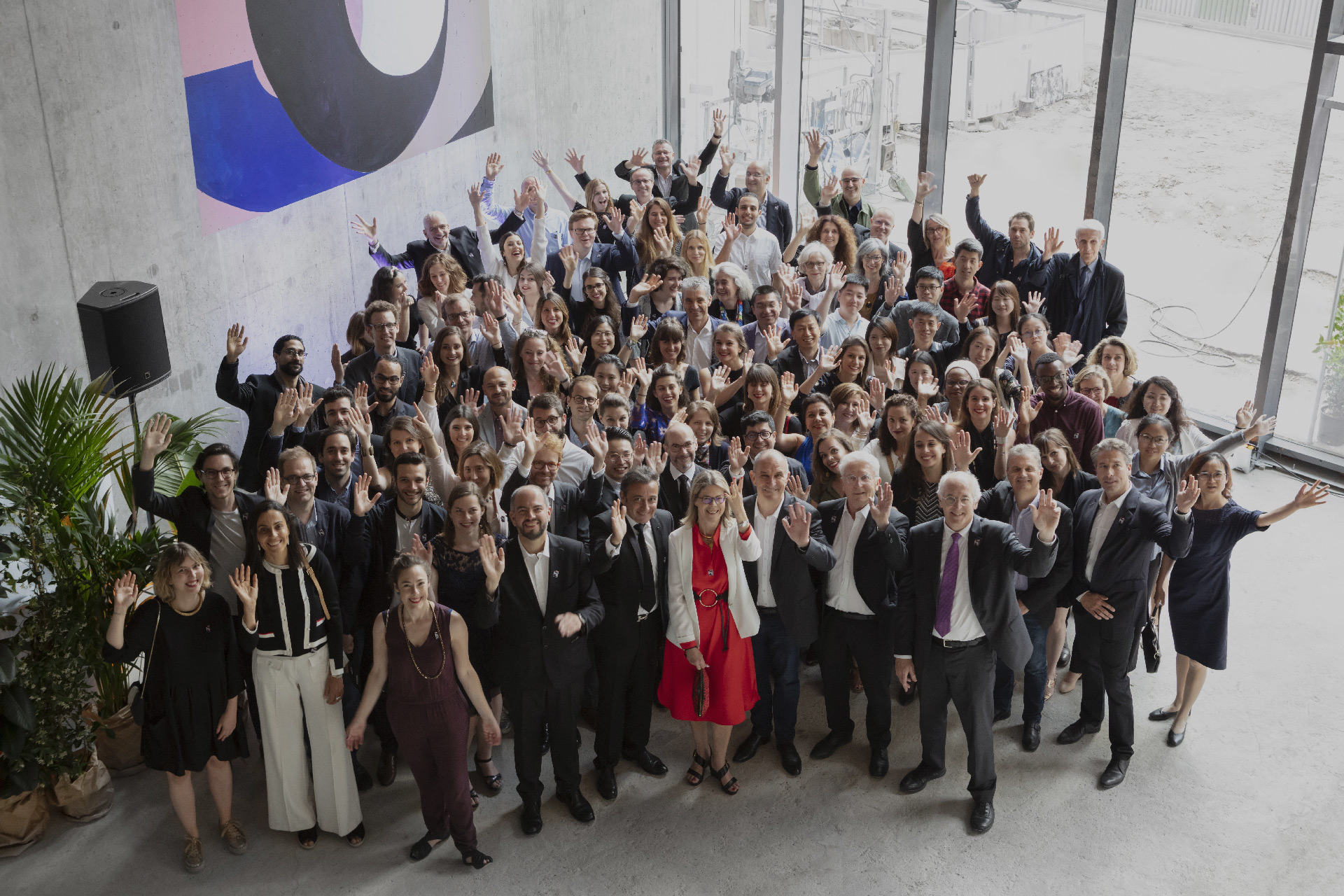



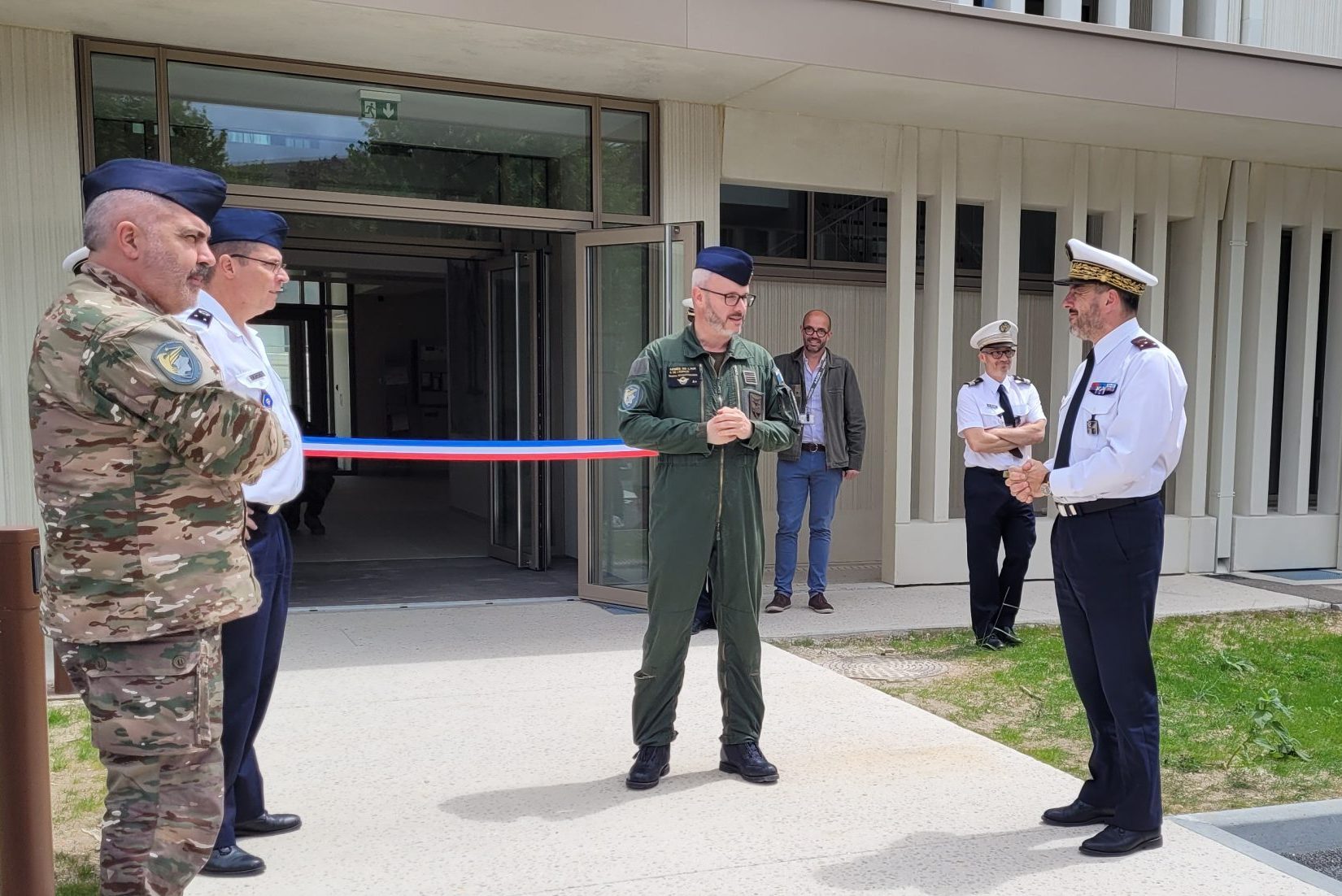
On Thursday 11 June 2026, the inauguration of the first accommodation block at Orléans-Bricy Air Base 123 took place, attended by Colonel Maxime SCHAFFHAUSER, commander of the air base.
The inauguration of this new accommodation block was eagerly anticipated. It provides decent living conditions for military personnel and helps to retain staff within the Air and Space Force, which is celebrating its 90th anniversary this year.
The project forms part of the 2019–2025 Military Strategy Programme, originally spearheaded by Minister Florence Parly, who allocated €1.2 billion for military accommodation and living conditions. The site’s previous infrastructure dated from before the Second World War and was in a state of disrepair.
Faced with the programme’s requirements to construct robust buildings with low construction and running costs, whilst optimising the construction schedule, Arte Charpentier quickly turned to an off-site construction solution.
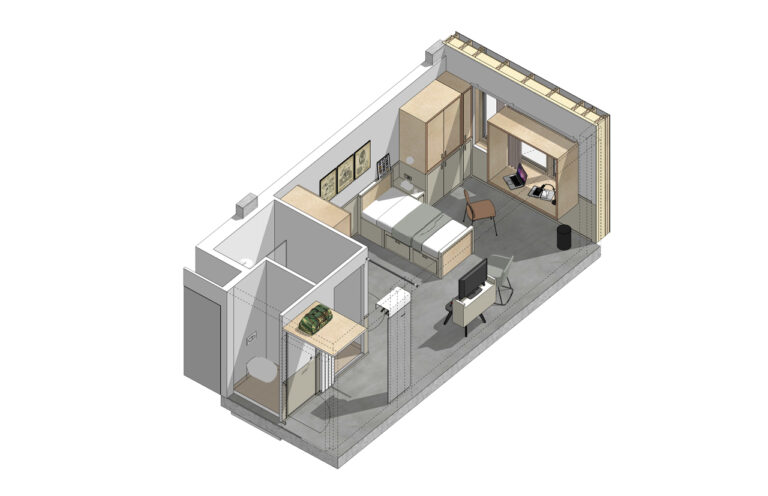
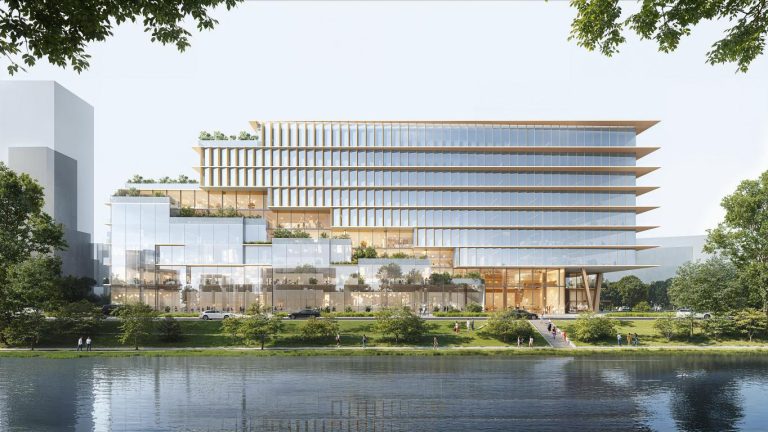
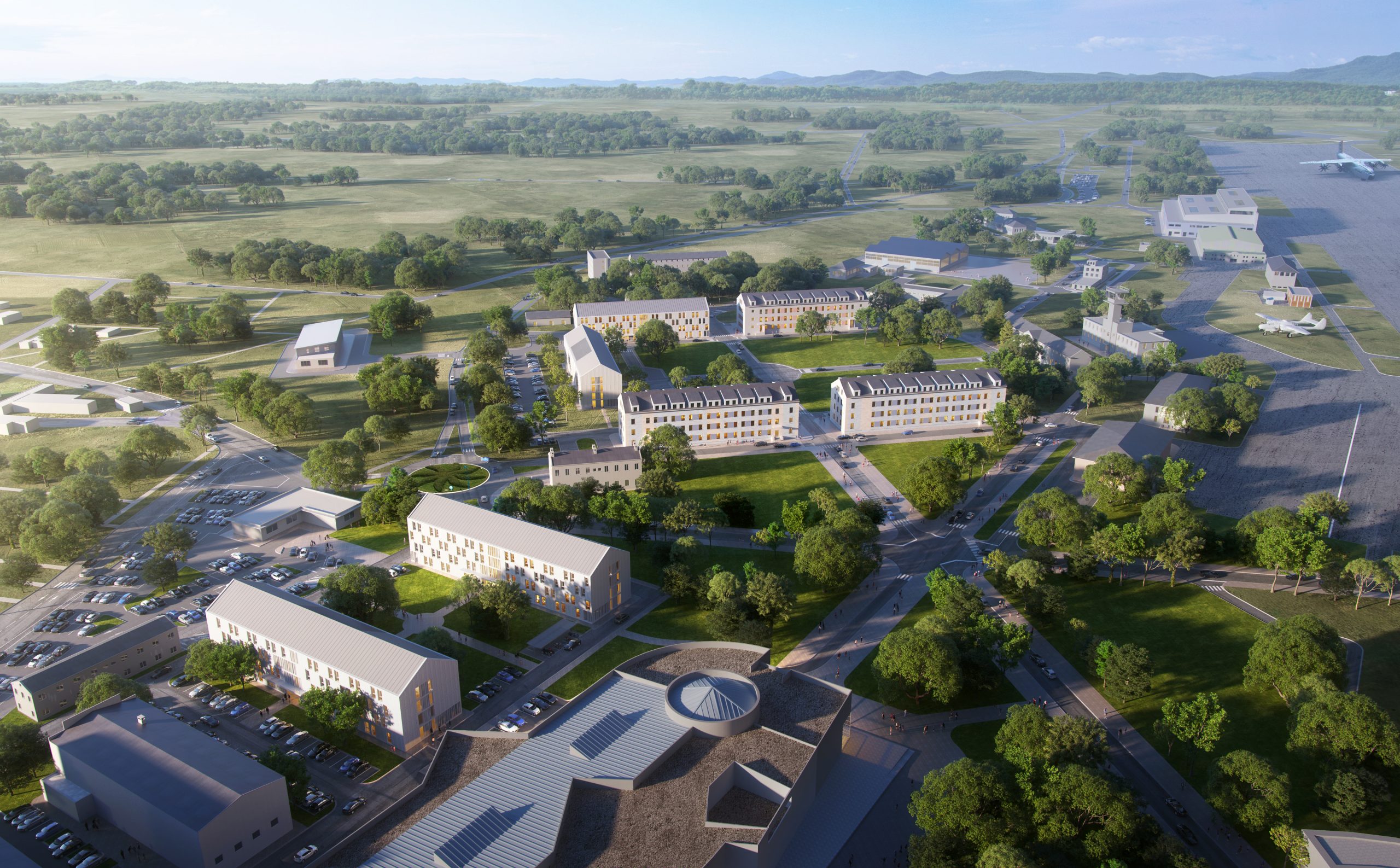
The programme for 480 double rooms is spread across two plots: East and West. To ensure the buildings blended into a context characterised by varied architectural styles, Arte Charpentier designed a standard building type comprising 120 rooms – rational and fairly compact – which echoes the geometry of the neighbouring preserved buildings, featuring a double-pitched roof. Its length was calibrated to allow it to be optimally integrated across the two plots four times over, whilst respecting the layout of the site.
Off-site construction
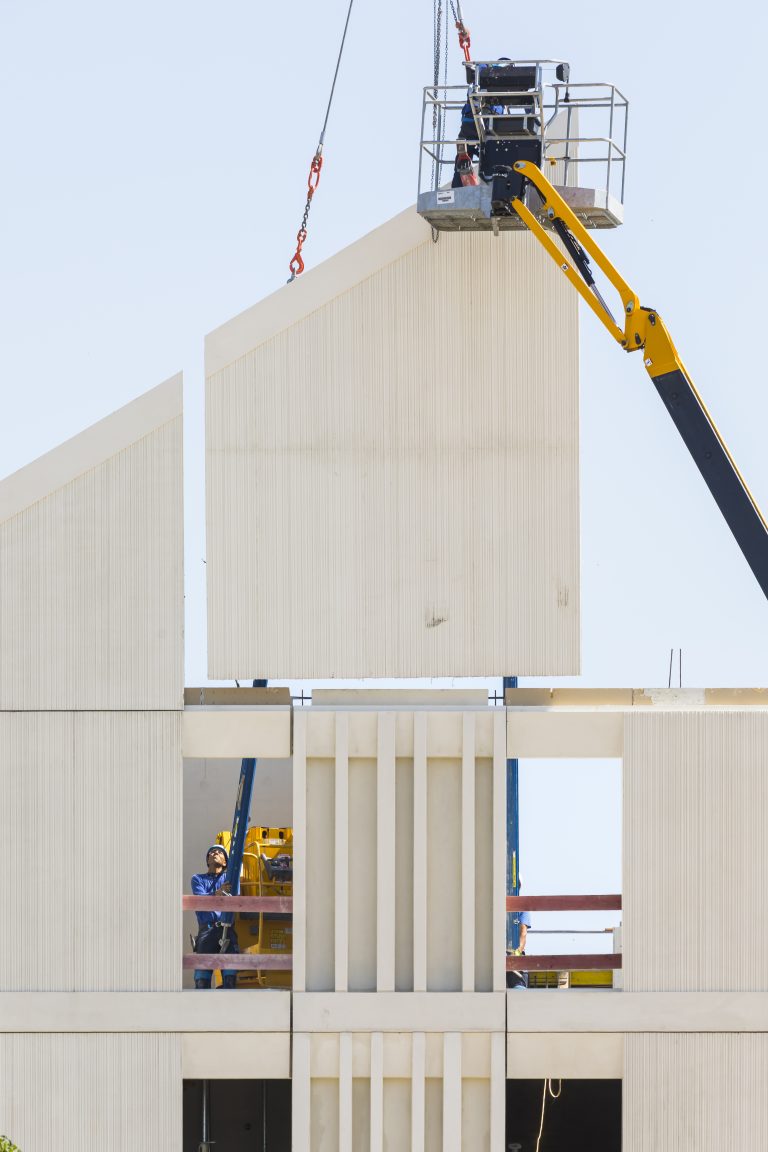
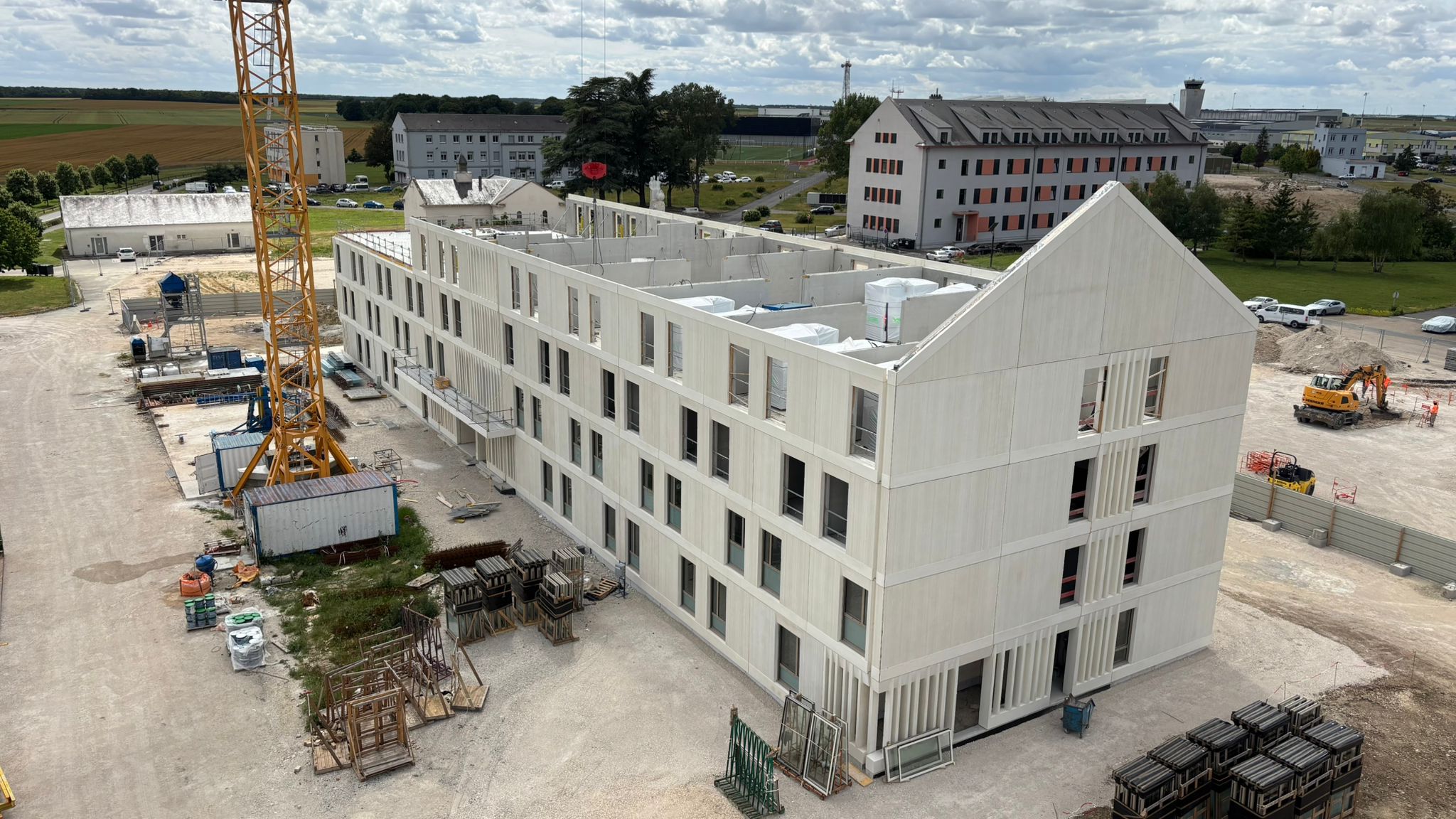
The standard building comprises industrially prefabricated concrete elements assembled on site (stairs, sandwich panels, precast walls and precast floor slabs), combined with a factory-assembled timber frame. CMEG’s P2P sandwich panels for the façades (incorporating a structural shell, insulation and beige textured external concrete) arrive on site 100% finished. The bathrooms and toilets, prefabricated off-site by HVA Concept, were installed as the works progressed. With very little concrete pouring on site, the construction of the superstructure is akin to a ‘dry construction’ method, enabling a considerable reduction in construction waste and ensuring a high-quality, workshop-finished appearance.
Work on the façades and details
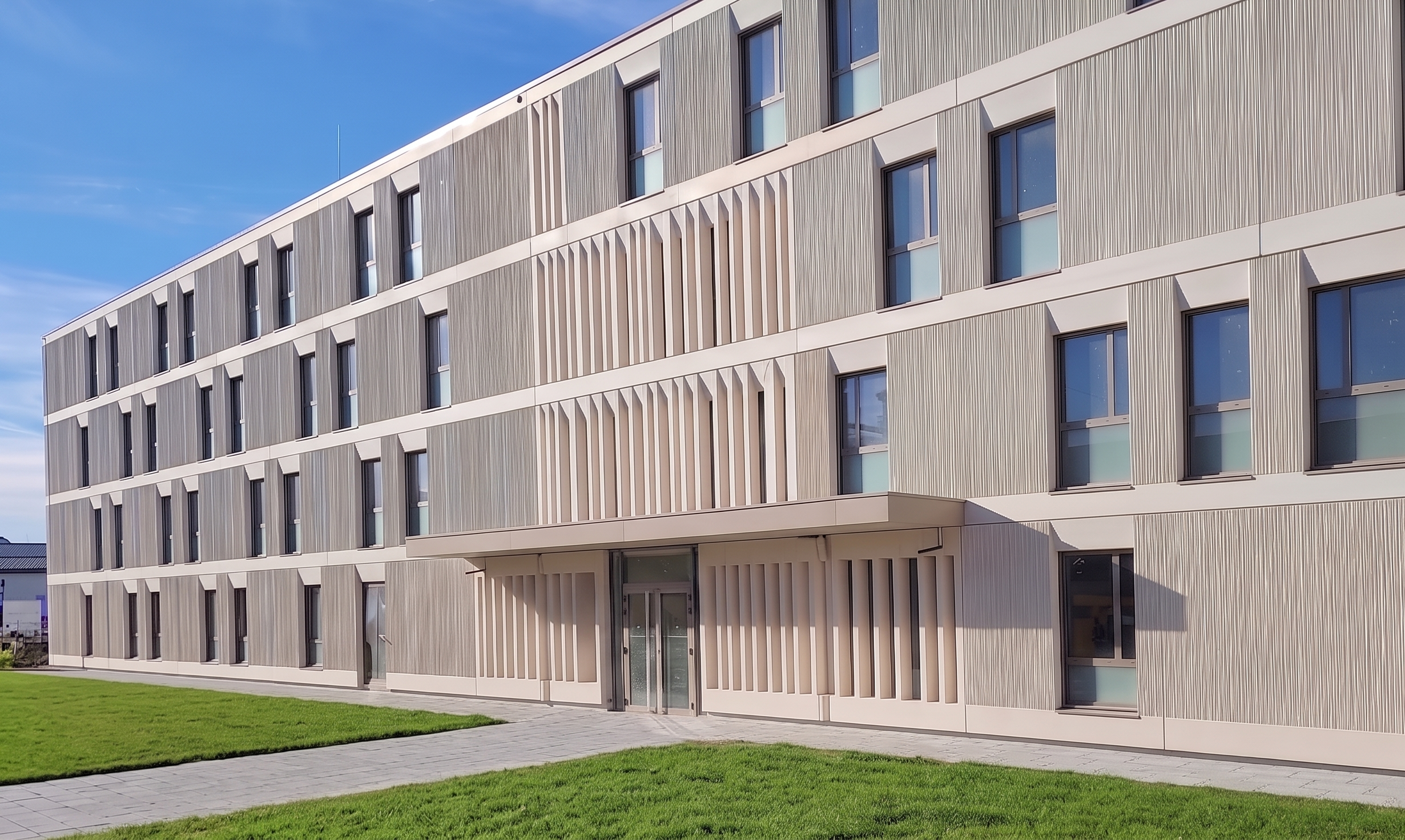
The choice of concrete sandwich panels for the façades was an obvious one, meeting the requirements for durability and low maintenance. The building’s envelope, with its minimalist aesthetic, is characterised by a combination of smooth and textured concrete. It subtly reveals the distinctive character of the spaces it encloses through a play of openings, shadows and light, in a understated, contemporary style that blends into a varied architectural context. The choice of vertical striated patterns interspersed with smooth bands was designed to conceal the prefabricated construction joints on the façade. Despite the building’s apparent simplicity, great attention has been paid to the details. The square rainwater downpipes are recessed into the walls and blend in with the sunshades in the central section. Careful attention has also been paid to the signage and decorative panels in the lobby.
The user and the building’s purpose as the guiding principle
For Arte Charpentier, the design of these buildings centred above all on finding the ideal size for accommodation and a level of comfort befitting a genuine living space.
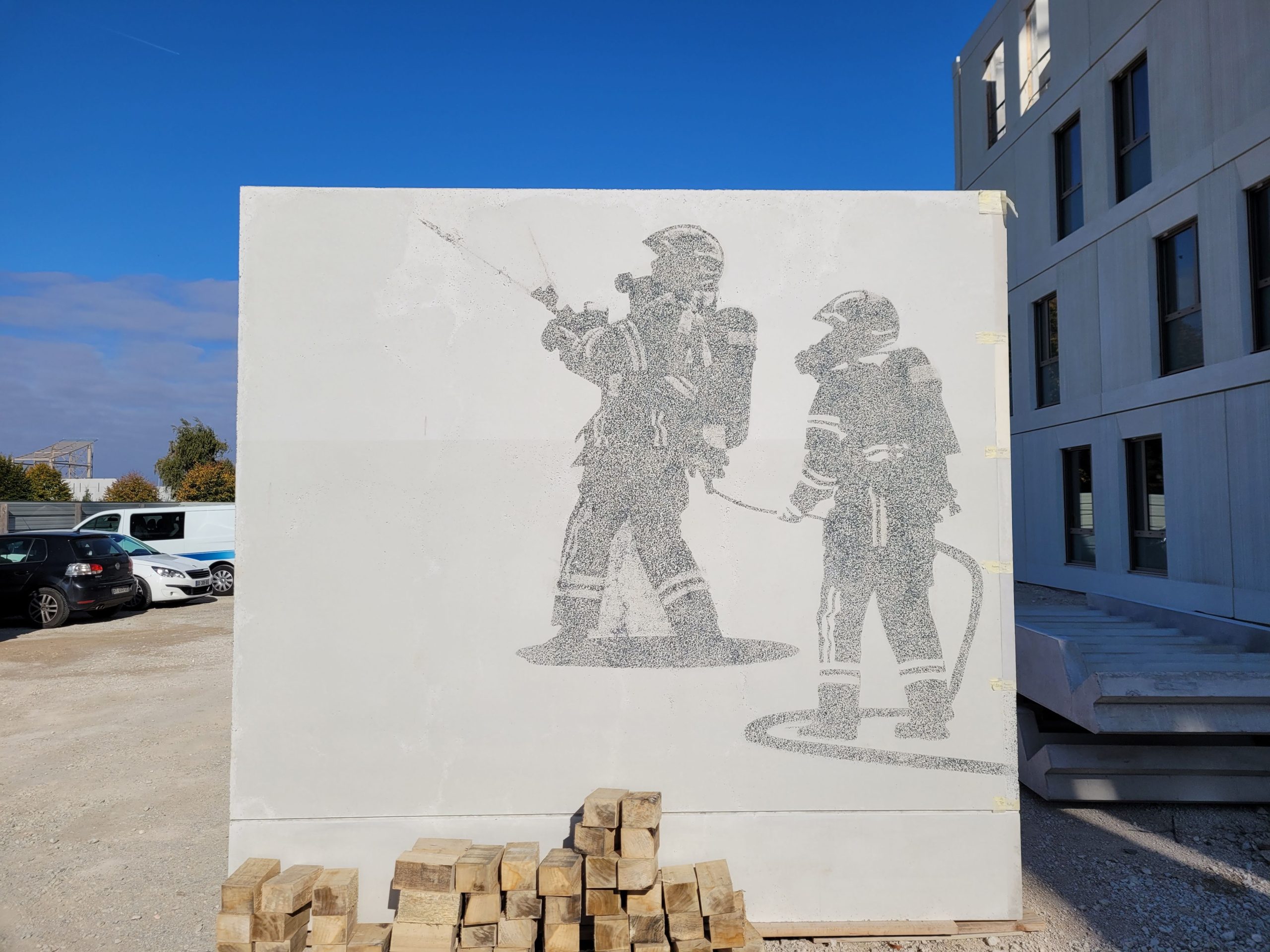
Every detail has been thought out with the military personnel’s daily lives in mind: from the bedrooms to the naturally lit corridors and staircases. Specific facilities, such as the space beneath the footbath for washing boots, sit alongside distinctive artistic touches, such as the illustrations of firefighters and aeroplanes in the entrance hall.
Every detail has been thought out with the military personnel’s daily lives in mind: from the bedrooms to the naturally lit corridors and staircases. Specific facilities, such as the space beneath the footbath for washing boots, sit alongside distinctive artistic touches, such as the illustrations of firefighters and aeroplanes in the entrance hall.
Compactness and resilience (Objective E3C1)
In the context of climate change, the resilience of buildings is essential. Thanks to the highly compact layout of its design (approximately 62 metres in length per building), the light colours of its façades and the elimination of thermal bridges through high-performance external insulation, the building ensures excellent hygrothermal comfort in summer. The spaces feature extensive glazing to make the most of winter sunlight, whilst the loft spaces are insulated with bio-based materials (cellulose wadding). The careful balance between the use of concrete, timber framing and bio-based insulation, combined with renewable energy generation via photovoltaic panels, enables this exemplary project to aim for E3C1 level under the Énergie-Carbone rating system.