



Faced with the collapse of life and the climate emergency, architecture has an essential role to play. In just a few decades, cities have gradually forgotten about life. Artificial soils, mineral surfaces, ecological disruptions, loss of biological diversity…
However, the environmental crisis we are experiencing is forcing us to radically rethink the way we design architecture and cities.
At Arte Charpentier, this conviction informs our practice: designing spaces that welcome living organisms, create the conditions for their sustainability, and become ambassadors for a new urban nature. It is this vision that we wanted to illustrate through a series of six emblematic projects.
Palaiseau Campus ECLA – A refuge landscape
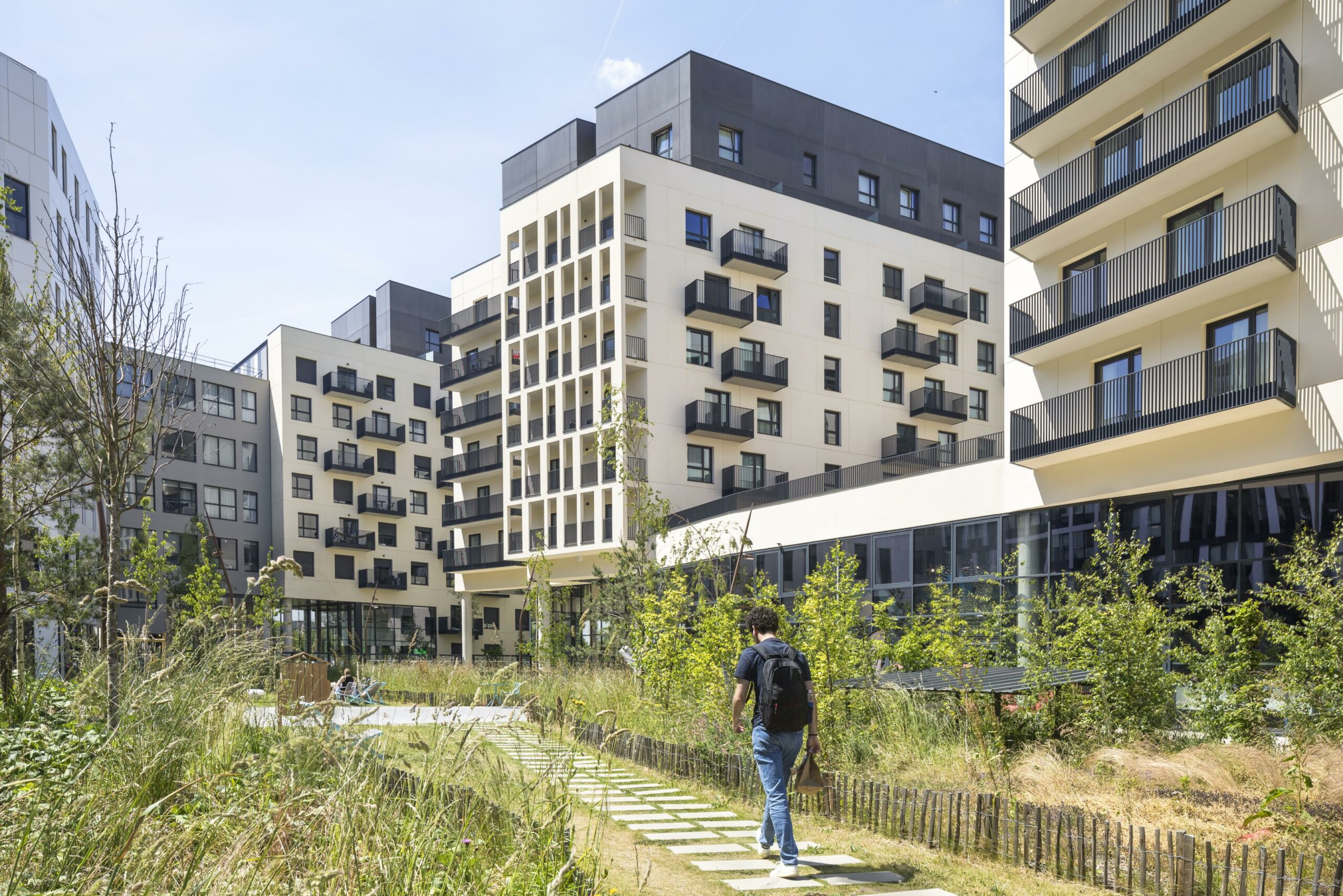
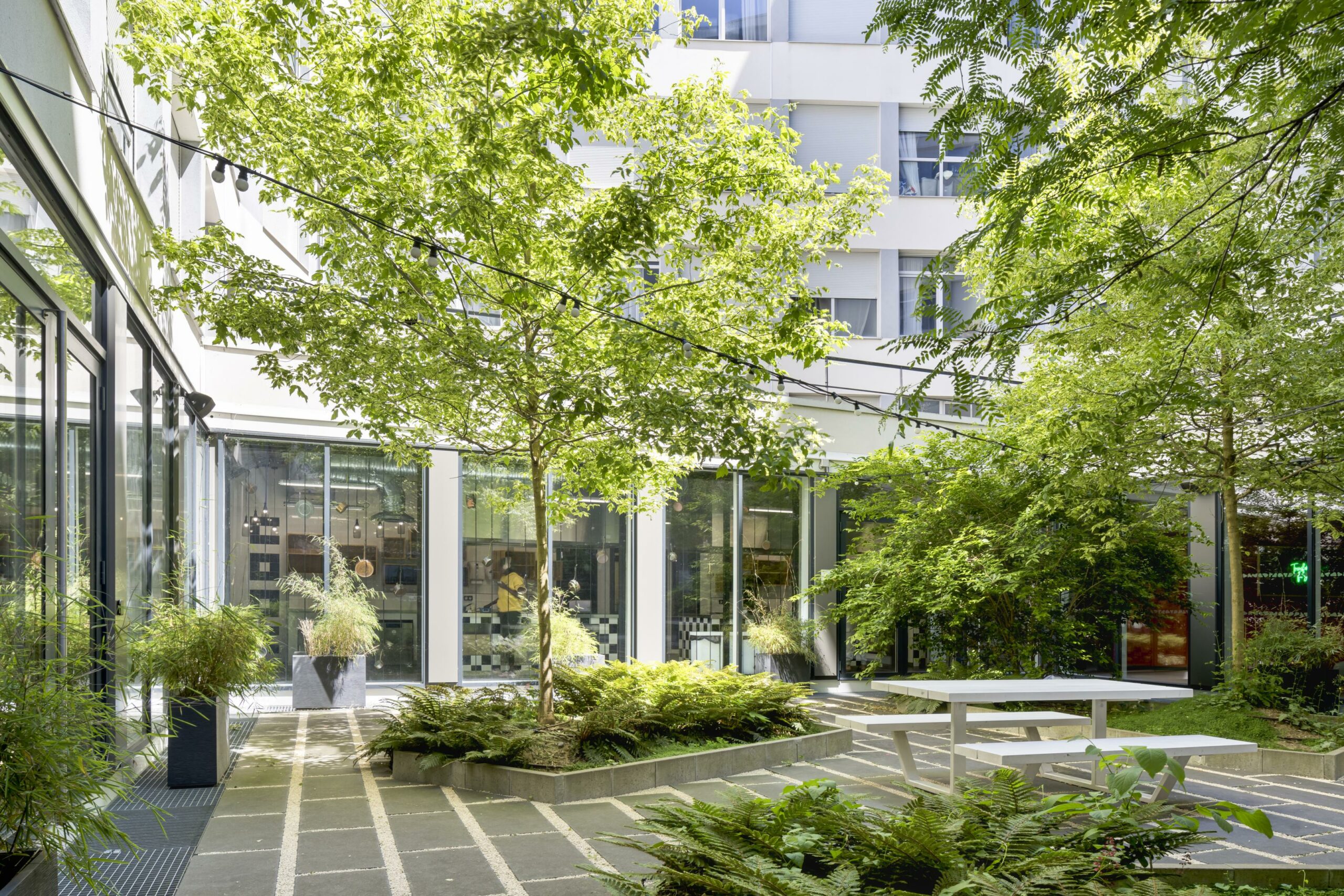
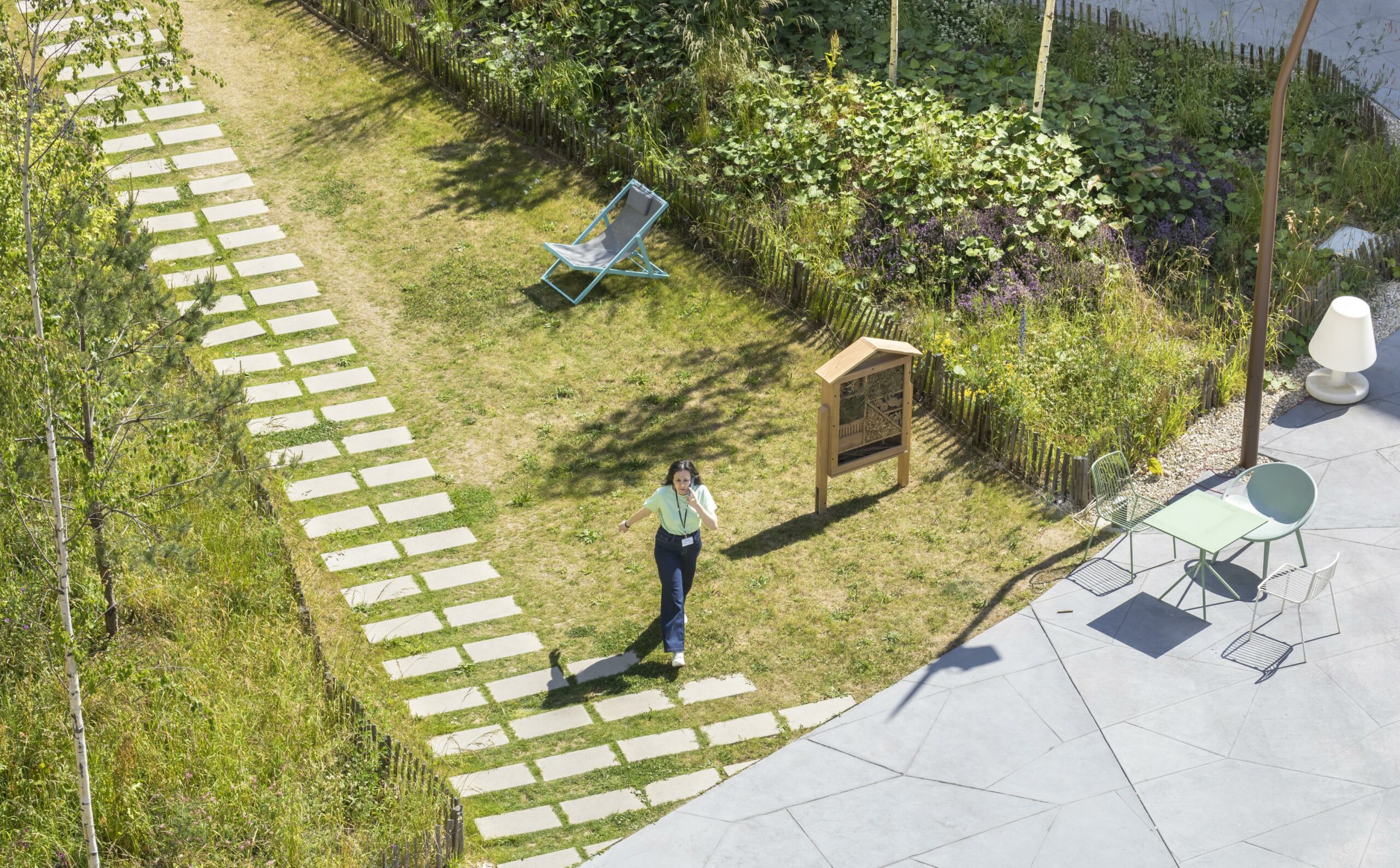
At the heart of the ECLA residence in Palaiseau, the landscape stands out as a shared refuge. Around the central forecourt and landscaped areas, lush vegetation invites residents to relax or work outdoors. Inspired by the surrounding natural environment, meadows, moors, and woodlands follow one another, offering a mosaic of habitats adapted to the site’s sandy soils. The original well-drained soil, preserved on site, allows for gentle rainwater management, without the need for massive amounts of exogenous soil or massive discharge into urban networks. Ecological sobriety, environmental autonomy, aesthetics, and usability come together in a living, resilient, and welcoming landscape.
Project owner: Oceanis
Missions: architecture, interior architecture, landscape
Paris Poncelet – Reinventing the service sector to serve life
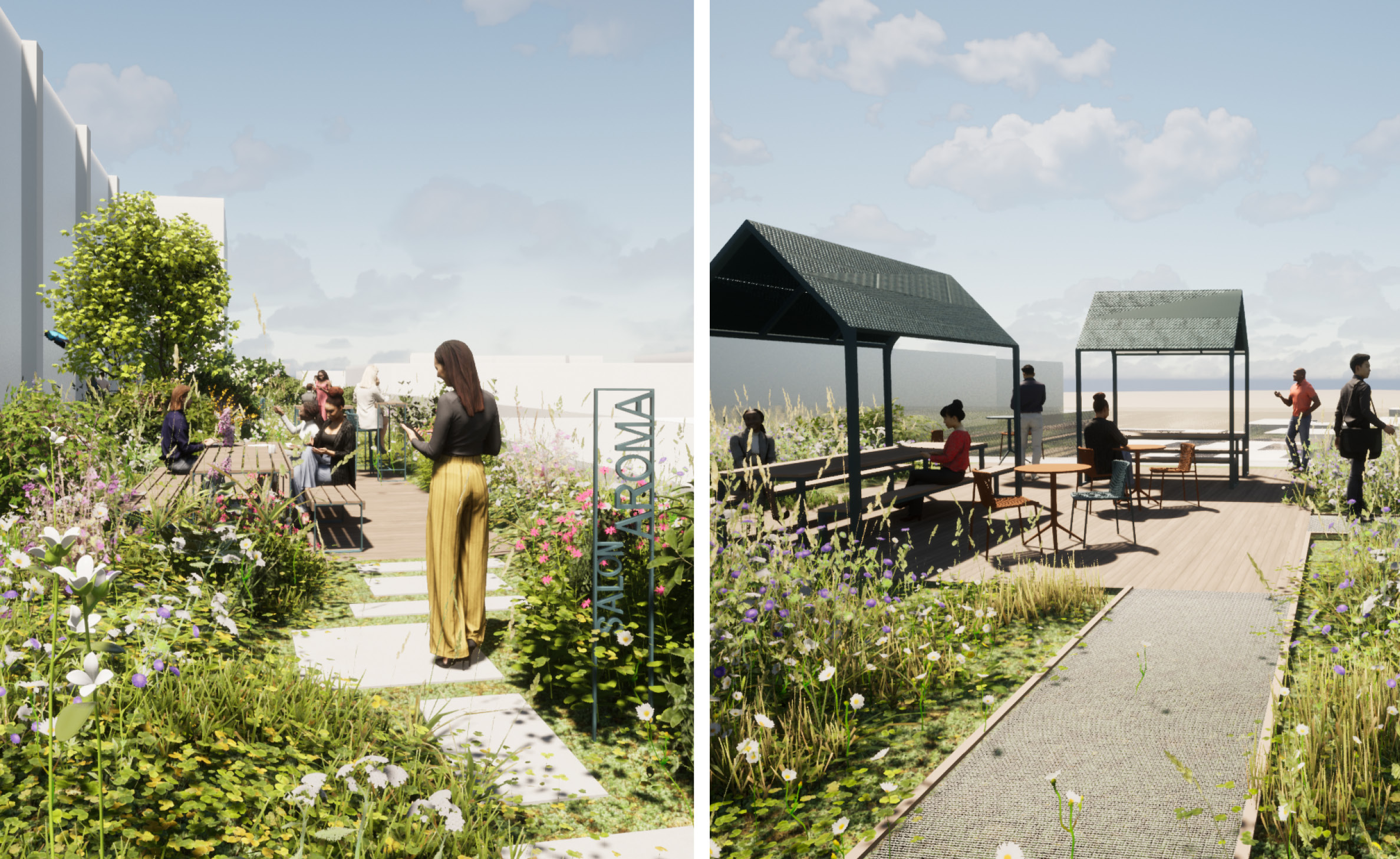
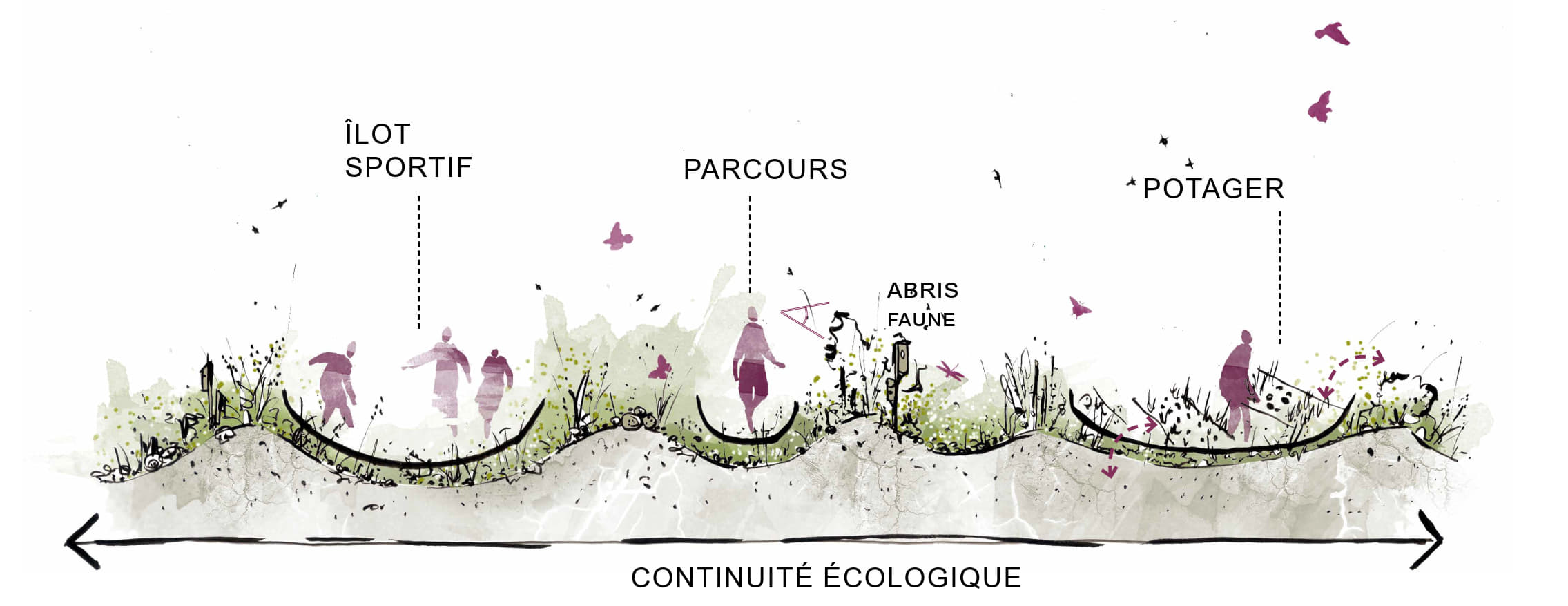
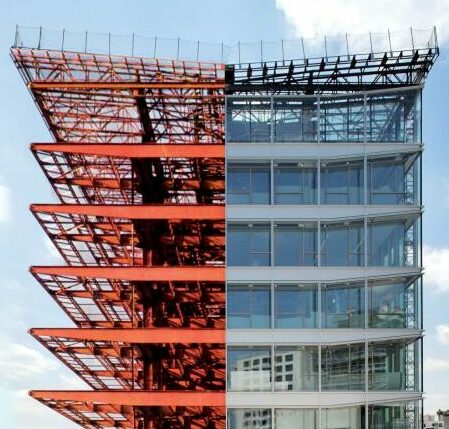
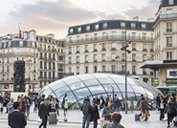
In Paris, the renovation of a commercial building is transforming a concrete block into a living urban ecosystem, where nature shapes the project.
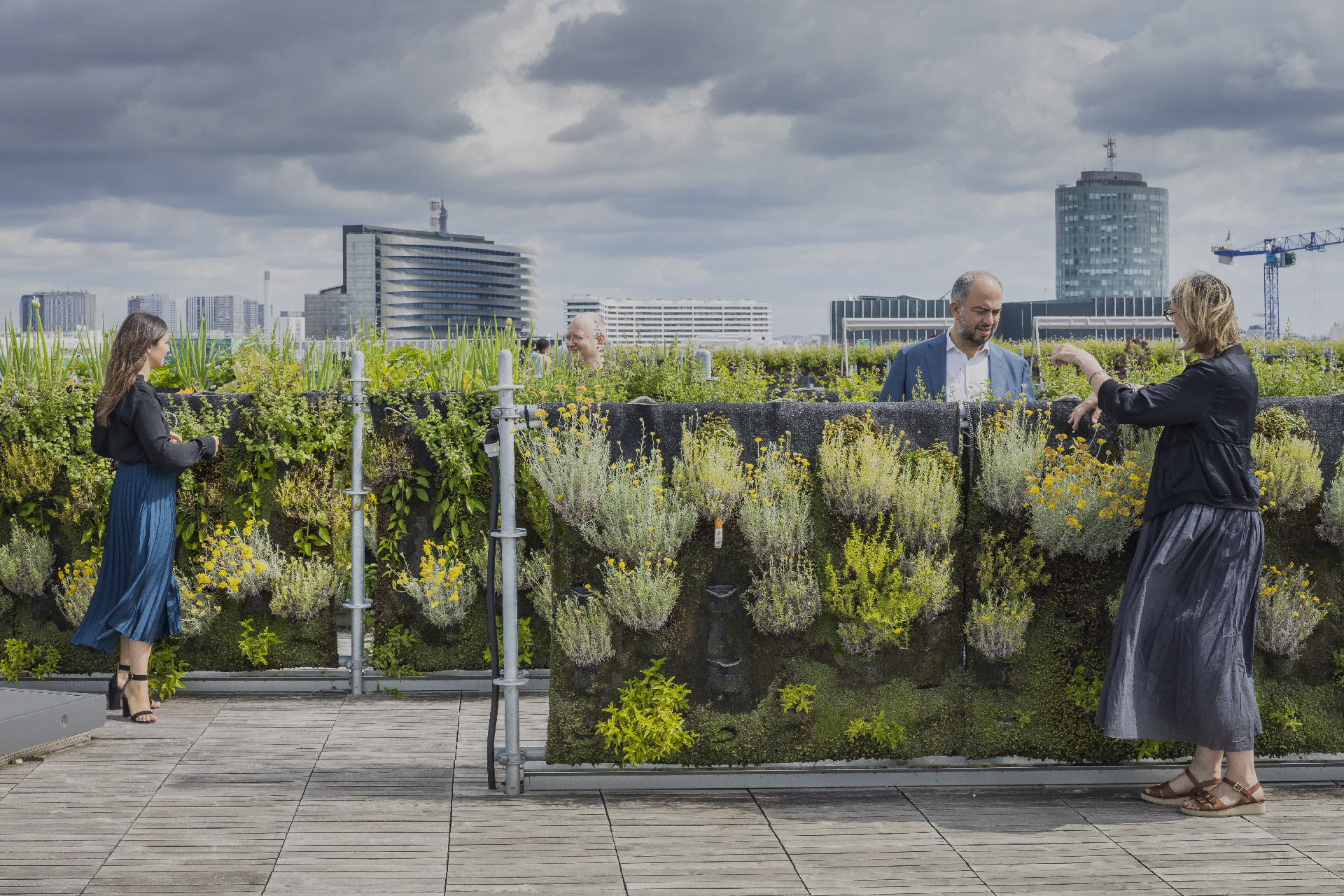
Sensory terraced gardens and rooftop green spaces welcome biodiversity and users, promoting well-being and reconnection with nature. These spaces, ecological refuges, improve comfort and rainwater management while fully integrating nature into the heart of the city. The project exceeds the requirements of Paris’s PLUB (local urban planning plan), affirming an exemplary approach to renaturation in a dense environment.
Project owner: Batipart Group / Architect: DATA Architects
Mission: landscape
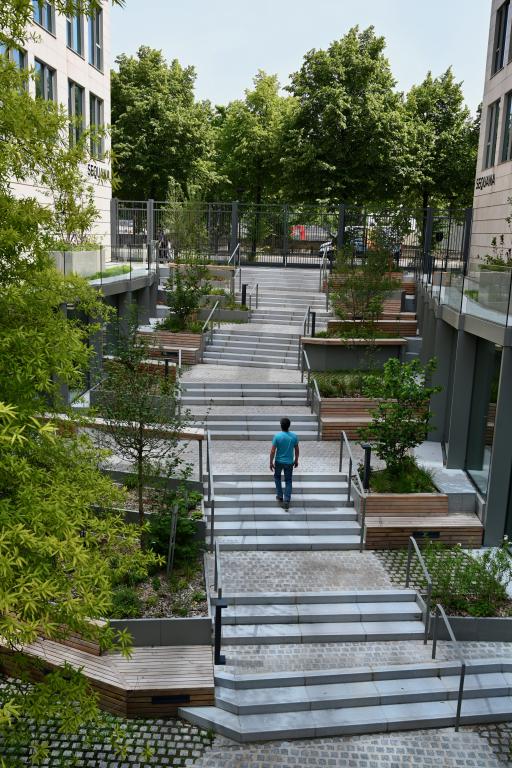
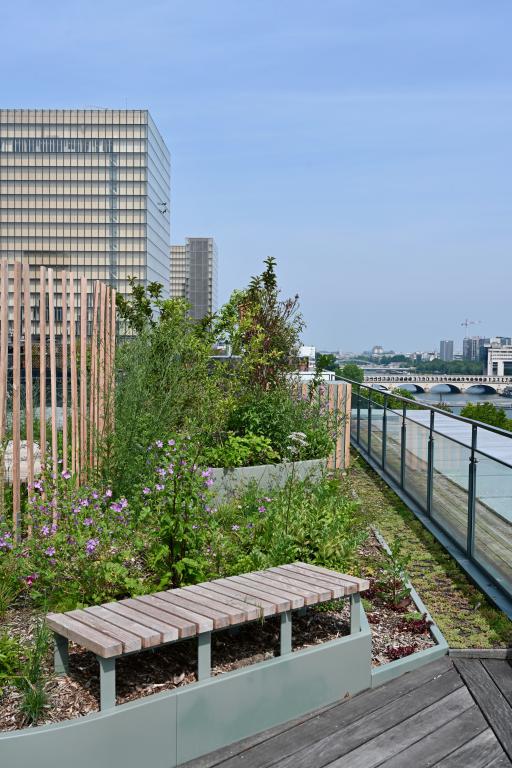
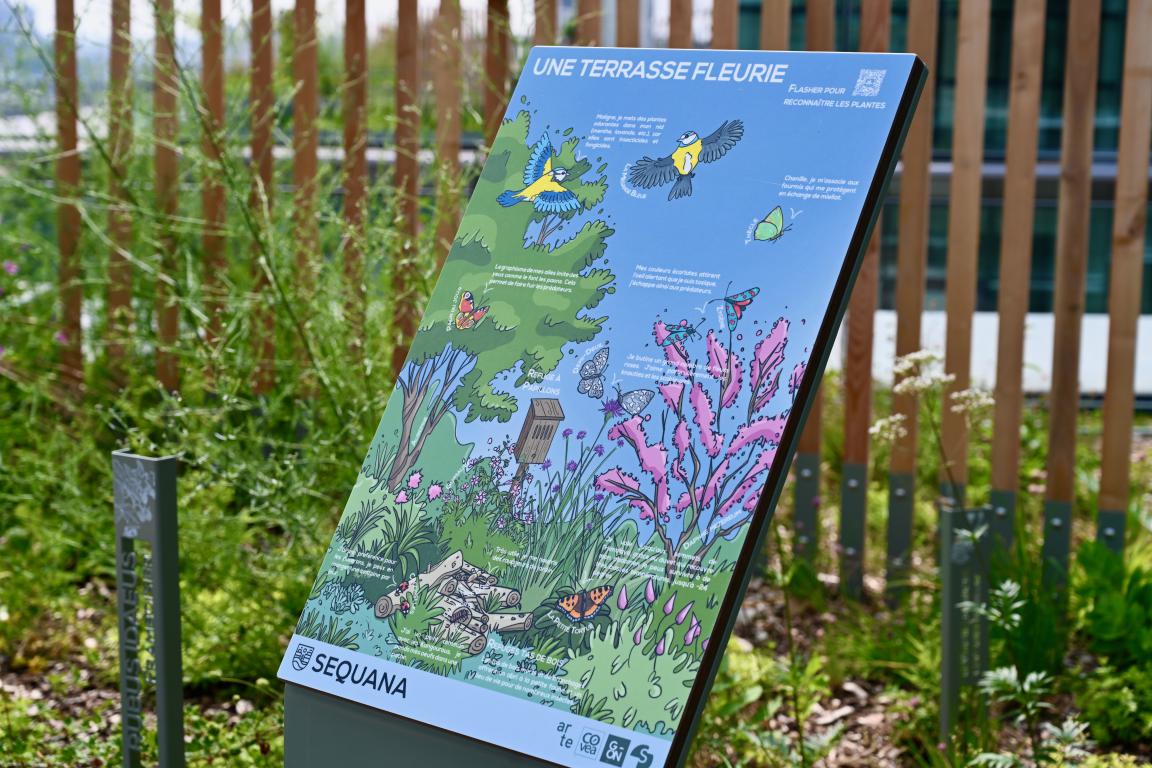
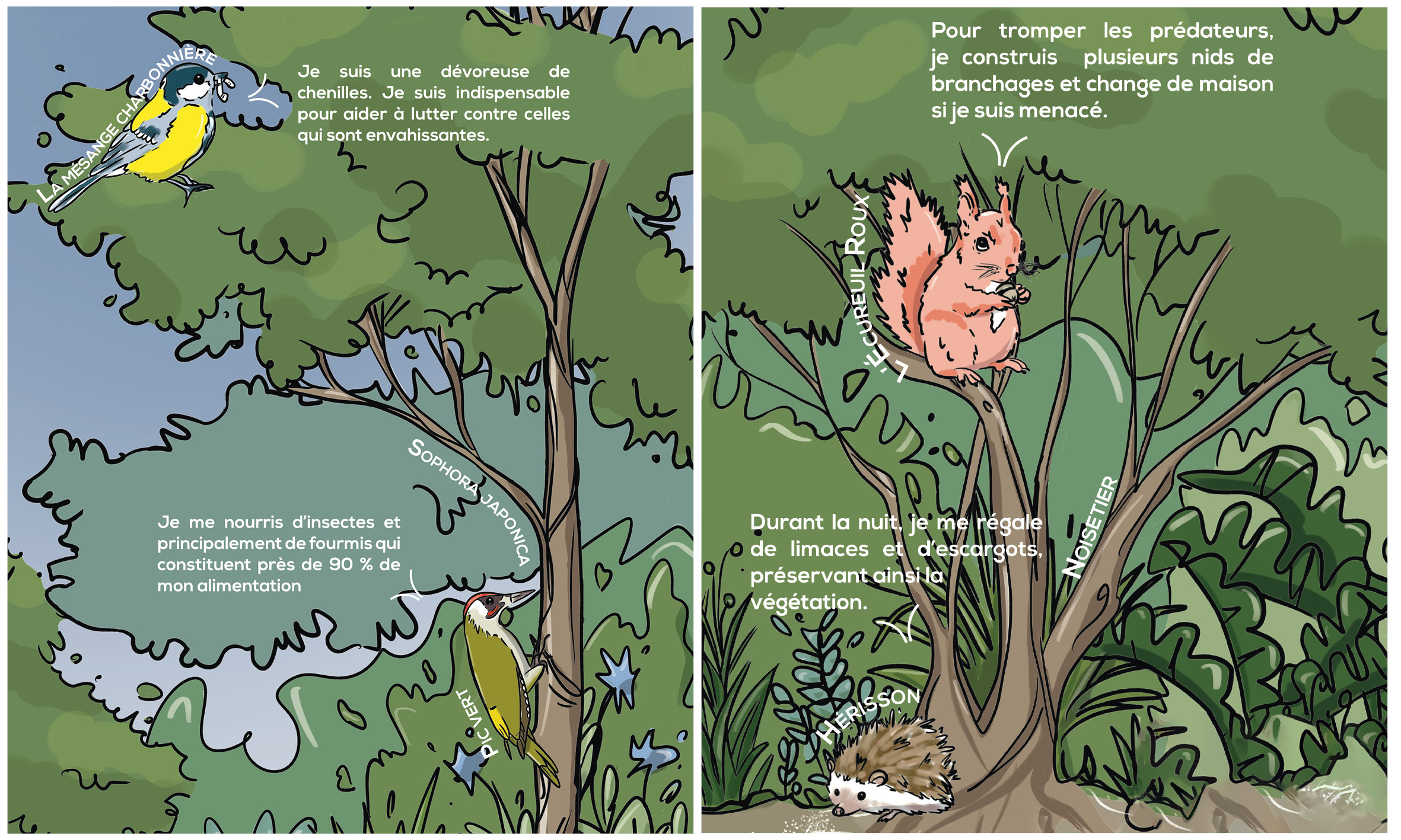
Paris Sequana – Raising awareness among users
Lomme Campus ECLA – An ecological territorial framework
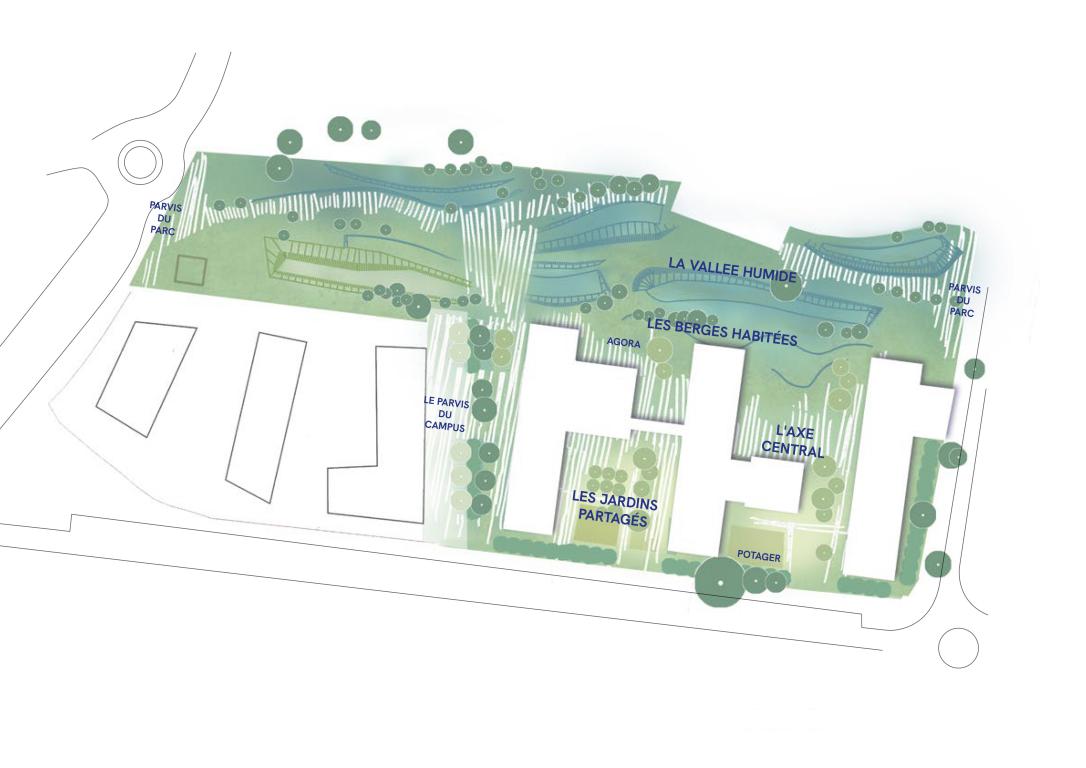
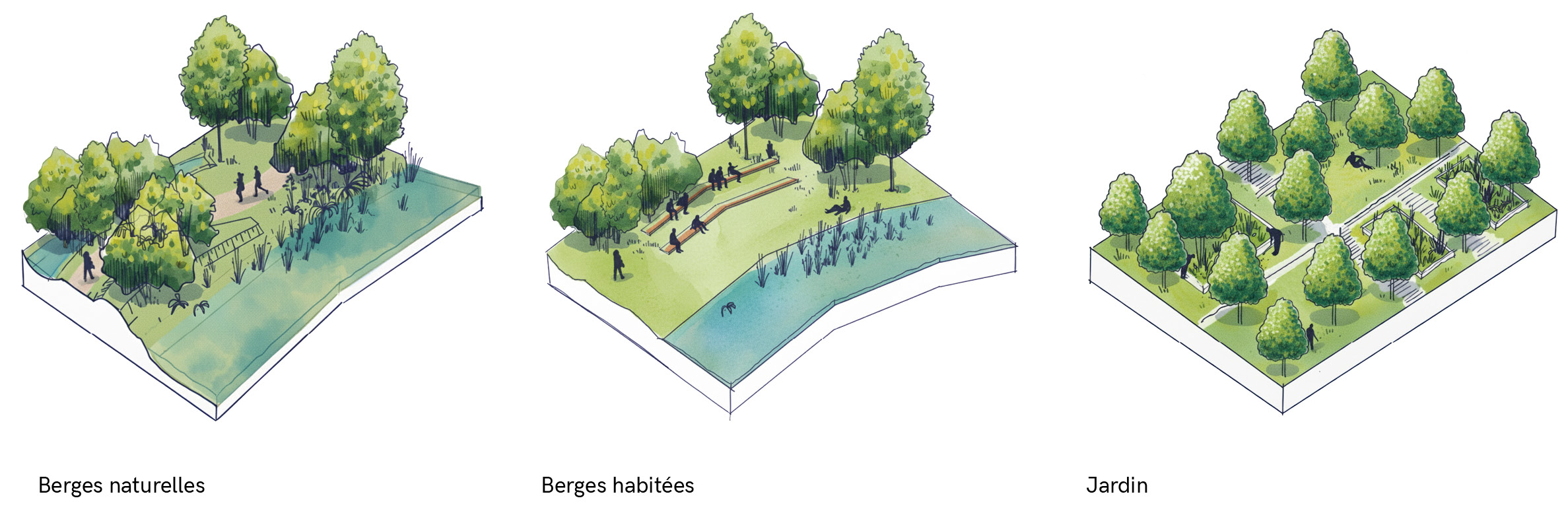
The project is part of an ecological approach linked to the greenway and the neighboring wetland, which is rich in biodiversity. It establishes an ecological network that promotes natural continuity and welcomes wildlife. Local species, rain gardens, flower meadows, and microhabitats create a self-sustaining and resilient ecosystem. Each space becomes a support for biodiversity and well-being. This living environment offers students a setting conducive to health and learning. In Lomme, the project reflects the ecological ambitions of the city, a member of the Transition Towns network, and the commitment of Arte Charpentier, which has joined the Low Carbon Pact of the European Metropolis of Lille, to regenerative and low-carbon architecture.
Project owner: Oceanis
Missions: architecture, interior design, landscape
In France, project management assignments involve us monitoring the construction site until completion and beyond, with botanical monitoring for some projects.
Internationally, particularly in China, we promote an approach to biodiversity preservation and development upstream, at the programmatic level.
In Caidian, the master plan and urban and landscape regulations have created an ambitious framework where urban planning is structured around the blue network. Wetlands are preserved and all public spaces accommodate both uses and fluctuations in rainwater.
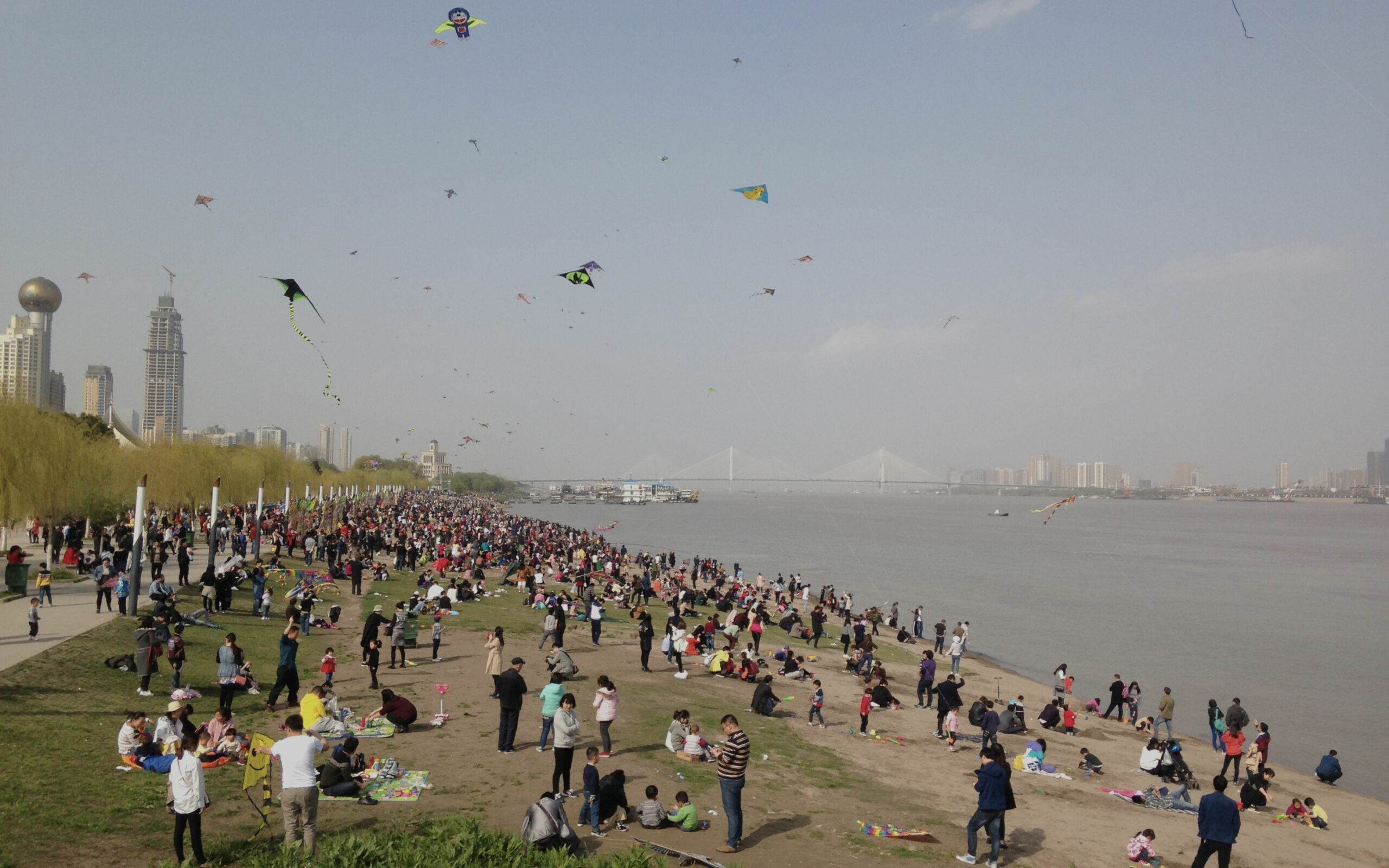
In Wuhan, for the Wuchang CBD Riverside, the creation of the neighborhood was planned around the enhancement of a brownfield site transformed into a park, rich in biodiversity and potential uses.
Lisières Park, Caidian Sino-French Eco-City, Wuhan – Reconciling city and nature
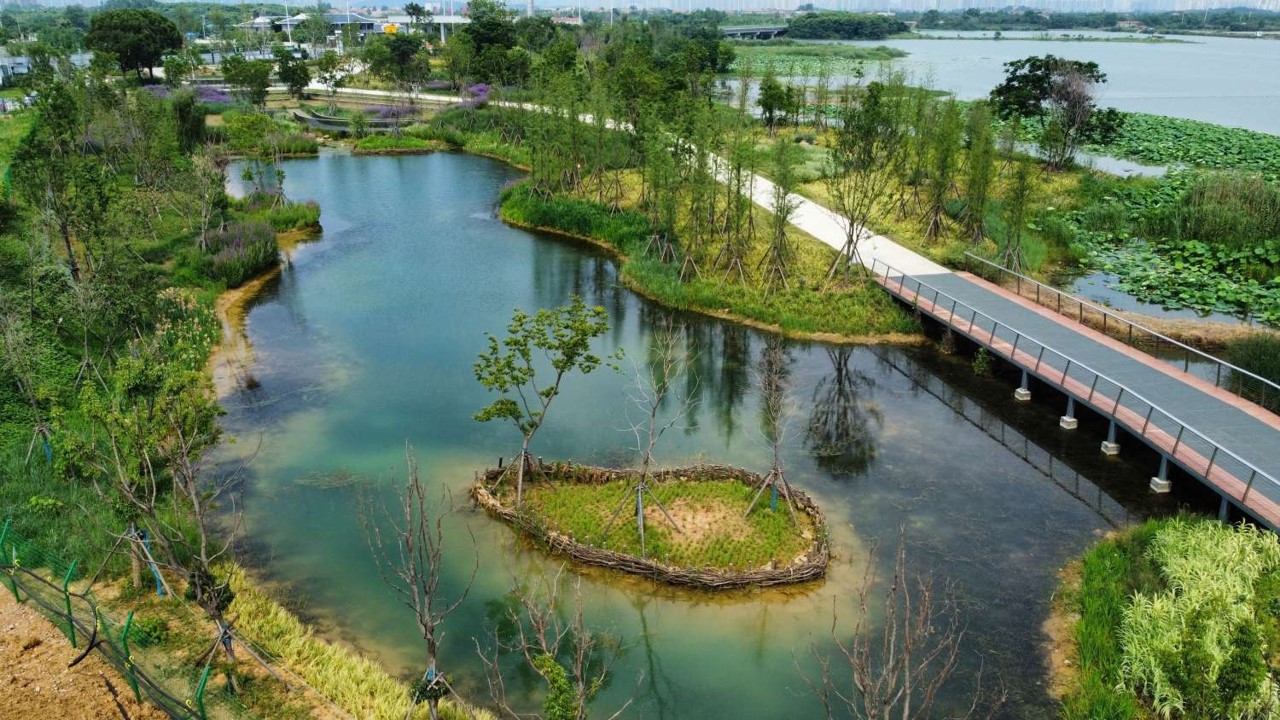
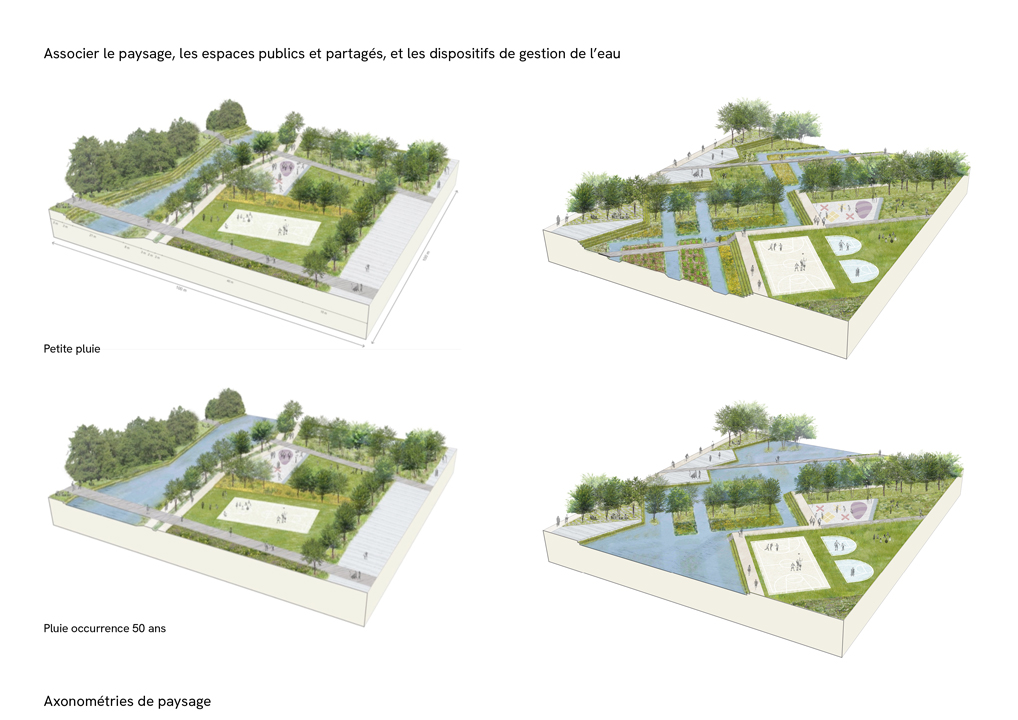
The Parc des Lisières is located in the heart of the Caidian Sino-French Eco-City Peninsula in Wuhan. The project marks a major step forward in environmentally friendly urban development. Located in an ecologically sensitive area, this large-scale project covers 2.2 km² and preserves all the wetlands bordering the lake. It highlights natural continuities and reinforces existing ecological balances. This project embodies a new way of living and reflects the shared ambition of China and France for responsible urbanization.
Client: Caidian Eco-City Management Committee – Caidian District Government
Missions: urban planning, landscape
Railway Park, Wuchang CBD Riverside, Wuhan – Bringing new life to an industrial wasteland
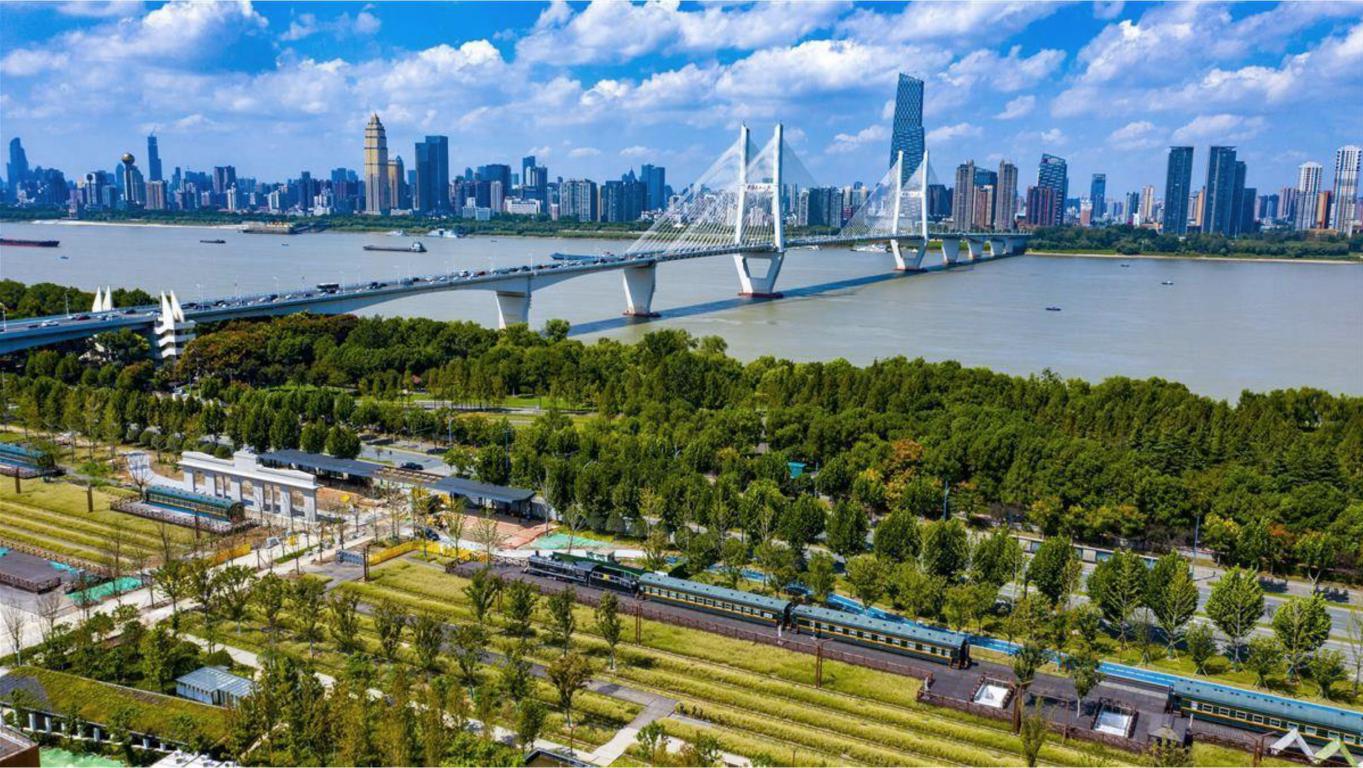
The Railway Park, located in the heart of Wuchang CBD Riverside in Wuhan, is an example of sustainable urban redevelopment. Transforming a former railway brownfield site into a public space rich in biodiversity, the project showcases industrial heritage by restoring seven historic buildings and integrating an old railway line into the urban fabric. This unique leisure and cultural venue embodies a harmonious approach, where nature, history, and modernity coexist to create a new, respectful, and innovative urban balance.
Client: Wuhan Land Use and Space Planning Research Center (WLSP)
Missions: urban planning, landscape