




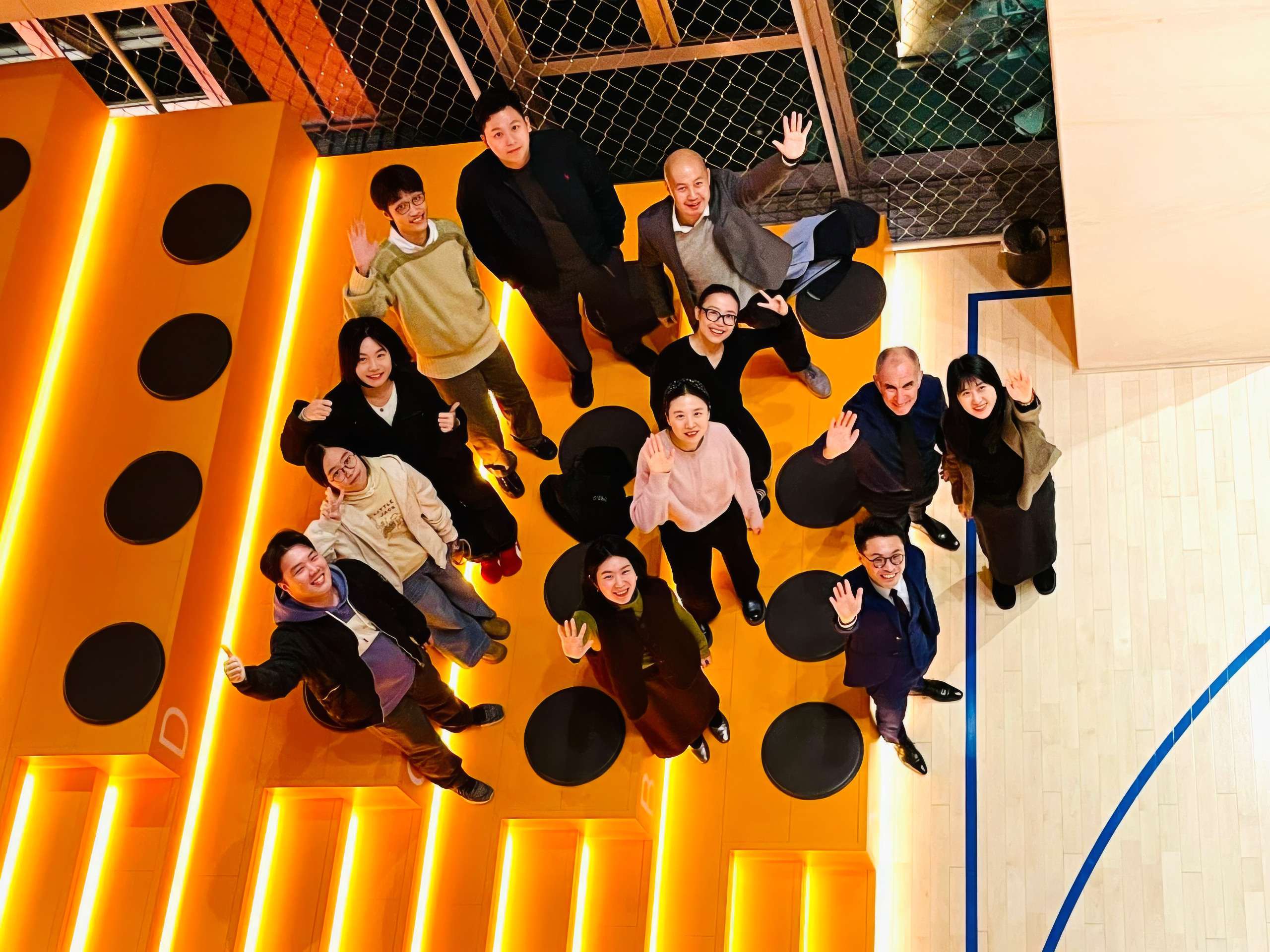
“For twelve years, we have contributed to the planning and design of Wuchang Riverside”
Exploring the banks of the Yangtze: Witnessing the river’s urban transformation
Hubei Daily / Journalists: Li Yuan; Correspondents: Kuang Xinyu, Liu Yujie
“It reminds me of Central Park in New York or Parc de la Villette in Paris. The developers didn’t give up the most valuable locations solely to real estate projects; instead, they reserved these spaces for the city.”
On June 8, Berserk Hsu, an urban planning student at the University of Toronto in Canada, visited the Simetang Railway Relics Cultural Park in Wuchang District, Wuhan, as part of a study trip. When he learned that French firm Arte Charpentier was establishing its Central China headquarters there, he was particularly struck by the international dimension of the location.
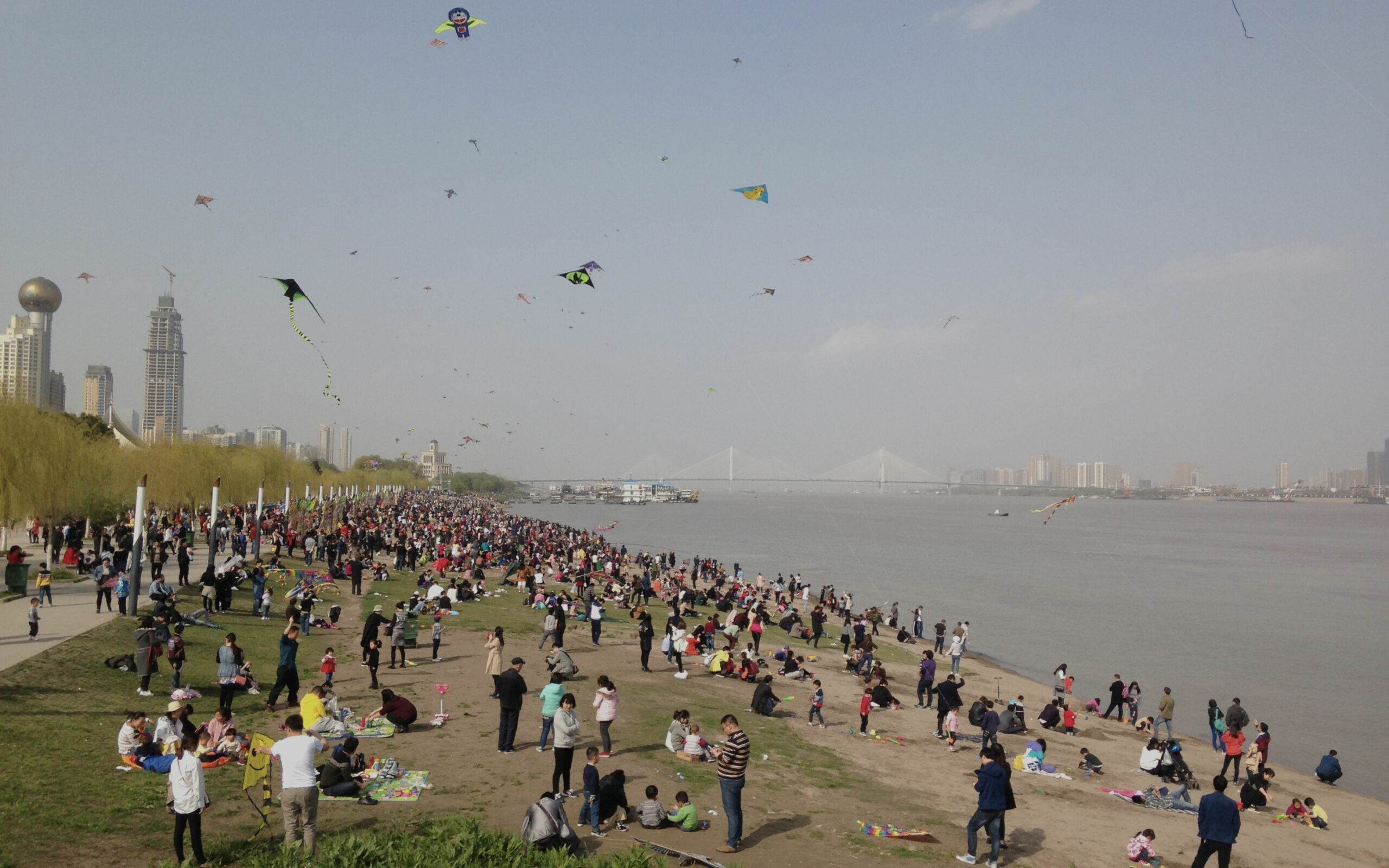
For Mingding Pan, Deputy General Manager for China at Arte Charpentier and Chairman of the Board for the China Region, reserving these open spaces is one of the concrete outcomes of the overall master plan for the Wuchang Riverside business district. Through parks, pedestrian paths, landscape continuity, and public spaces, residents and visitors can seamlessly traverse the city and naturally reach the banks of the Yangtze.
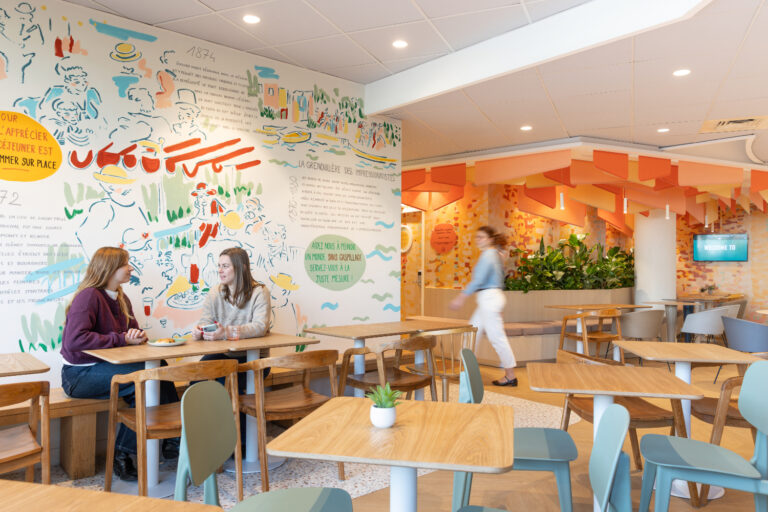
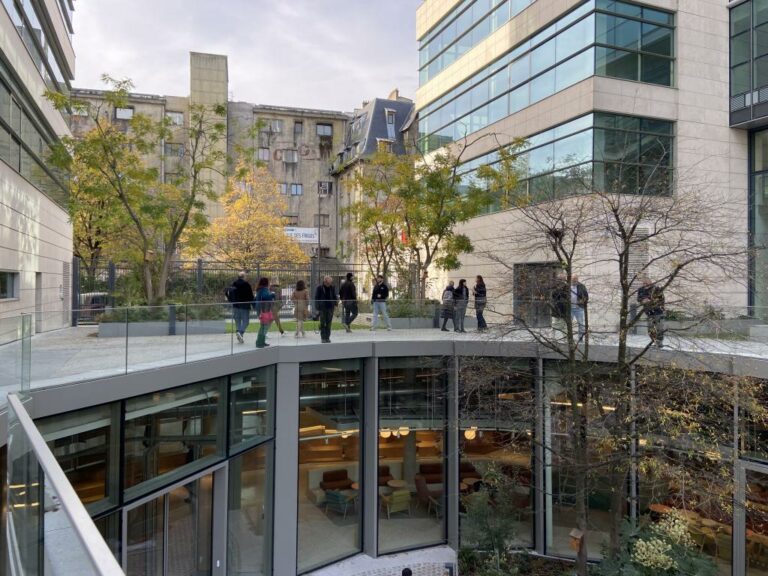
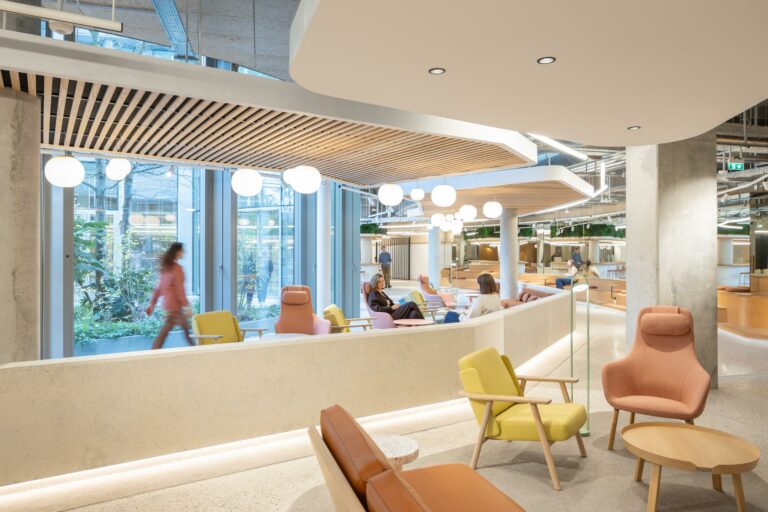
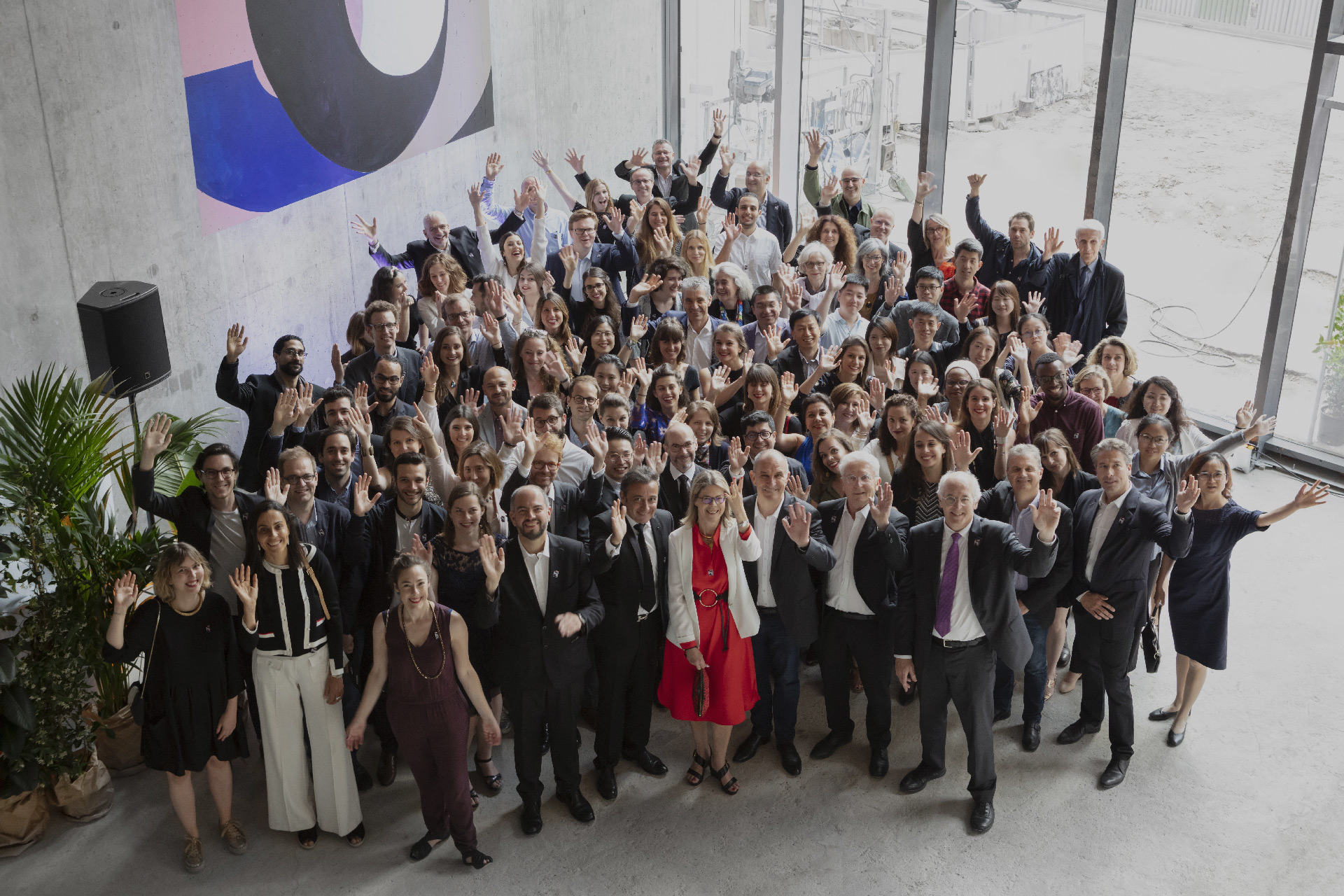
Arte Charpentier is one of Europe’s major architecture, urban planning, and urban design agencies, with projects around the globe. In 2014, the firm first participated in the urban planning of Wuchang, launching a long-term collaboration with the district government. Last January, its Central China office, also designed as an innovation platform, officially opened in Wuchang.
“For twelve years, we have contributed to the planning and design of Wuchang Riverside,” explains Mingding Pan. According to him, establishing this office is not just a strategic choice for the agency; it also represents the meeting of an urban vision and a city.
A First Project in Wuchang Grounded in Dialogue with the Yangtze
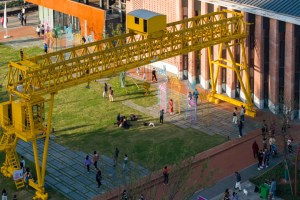
Repurposed former railway tracks, redeveloped disused docks, revitalized industrial brownfields, new pedestrian pathways, green spaces, and rest areas now intertwine in the Simetang Railway Relics Cultural Park. The site offers residents an open public space at the intersection of industrial heritage and contemporary urban life.
This transformation is no accident. As early as 2014, when Arte Charpentier took part in the overall master planning for the Wuchang Riverside business district, the team integrated the site’s heritage into its vision, along with the relationship between residents, the river, and the city. Creating an open space centered on the railway theme was already among the initial proposals submitted by the design team.
“The grand protection of the Yangtze, when translated into riverfront spaces, is not just about greening the riverbanks. It requires balancing solids and voids, building fronts and the water plane, vehicular traffic and pedestrian mobility,” explains Mingding Pan.
In the Wuchang Riverside business district, urban density is high. High-rise towers, commercial hubs, transportation networks, communication infrastructure, and service industries are heavily concentrated here. Yet, the master plan preserved a network of public spaces so that residents aren’t merely commuting between towers, but can also walk to the river, stop, and admire the Yangtze
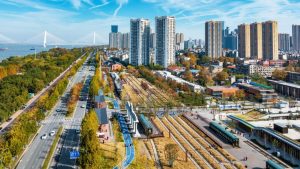
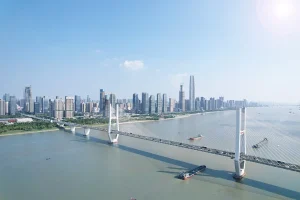
Thirteen kilometers away, the Yuewan Urban Balcony furthers this same initial intention: opening up the shoreline and making the river accessible to residents once again.
On Mingding Pan’s screen, journalists from Hubei Daily viewed a document dating back to June 2017. It was the second phase of the urban study conducted by Arte Charpentier for this sector. In that design, the waterfront axis was conceived as an “urban living room facing the river.” Today, the Yuewan Urban Balcony is gradually becoming one of the major realizations of that vision.
“On one side, a dense urban skyline of towers; on the other, a wide-open riverbank landscape. When the bridge lights turn on and evening clouds gather, the beauty of the Yangtze reveals itself with powerful force,” says the head of the Yuewan Urban Balcony design team at the China Southwest Architecture Design Institute. According to him, this project provides residents with a waterfront public space while giving the city a contemporary landmark rooted in Yangtze culture. Eventually, this space will serve as a national showcase for the achievements of the grand Yangtze protection project.
Leaving Wuchang to Pursue Dreams, Returning to Build along the Yangtze
Mingding Pan is originally from Wuchang. In his memories, Wuchang is defined by the texture of old streets, the warmth of daily life, sweeping views of the Yangtze, the coexistence of the old and the new, and the interweaving of ordinary life with grand landscapes. This is where his initial perception of urban space was formed.
After many years abroad, returning to his hometown as an architect to participate in its urban transformation gives him a dual perspective: one of personal attachment, complemented by a professional practice enriched by international experience.
Arte Charpentier’s connection to Wuhan dates back to 2010 with its first project: the Wuhan Citizens’ Home. Over the following years, the firm contributed to numerous architectural and urban projects across different areas of the city, accompanying Wuhan’s spatial transformation and supporting its major evolutions.
Ke Jing, Board Member for the China Region and General Manager for Central China at Arte Charpentier, showed journalists a map: over the past sixteen years, the firm has participated in more than thirty projects in Wuhan. More than half are located on the two banks of the main Yangtze axis, while most of the remaining projects are situated along rivers and lakes.
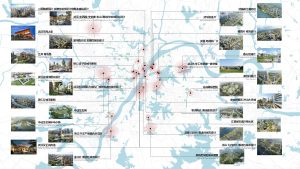
“Arte Charpentier’s growth in Wuhan follows its own logic of ‘born of water and thriving with the natural flow,’” explains Ke Jing. From the Yangtze to the shores of its lakes, Wuhan’s unique hydrological structure serves as both the foundation of its urban planning and an essential key to understanding its identity.
This series of water-centric projects has also allowed Mingding Pan and his team to deepen their understanding of Wuhan. The city’s vitality lies not only in its natural resources, rivers, waterways, and lakes, but also in its ability to return riverfront spaces to its residents and embed urban memory into modern daily life.
From the Yangtze Riverbanks to the Old Town Lanes: Deep Involvement in Wuchang’s Renewal
In recent years, the protection and revitalization of Wuchang’s historic center have continued. Arte Charpentier has been paying increasingly close attention to this area.
Mingding Pan captures the historic center of Wuchang from his memory with this image: “In Wuchang, the river and the alleyways are always just a few steps away.” In his eyes, what makes Wuchang deeply endearing is this constant connection between the city and the Yangtze. Residents can wander from ancient lanes to the riverbank, then back into the neighborhoods. It is within this seamless flow that history and the present, landscape and daily life truly come together.
The Wuchang District Chamber of Commerce played an active role in attracting Arte Charpentier to set up office in Wuhan. According to one of its officials, for Mingding Pan, the projects in Wuhan are more than just design assignments: they represent a homecoming. He aims to bring international design concepts, expertise in low-carbon building, and a well-structured professional team back to his hometown.
This feeling isn’t unique to Mingding Pan. Nearly two-thirds of Arte Charpentier’s team in Wuhan are Wuchang natives with international educational backgrounds.
“Allowing a group of people who originally left Wuchang to return and build it is deeply meaningful in itself,” emphasizes Ke Jing. “Because they know this land, the team members have a better sense of what needs to be protected, which spaces can be renewed, and which urban memories should be rekindled.”
Over the past two years, Arte Charpentier has become more deeply involved in Wuchang’s urban renewal, particularly in several waterfront sectors such as Baishazhou, Nongjiangsuo, and the Wuche residential area. Several projects are gradually moving from blueprint to reality.
According to Mingding Pan, Wuhan was born from the river; today, it is renewing itself through water as well. Looking ahead, Arte Charpentier will continue to anchor itself in Wuchang around the themes of the grand Yangtze protection project, old town renewal, and low-carbon development, aiming to deliver reproducible and transferable urban renewal models, and showing the world, through Wuhan, new possibilities for Chinese cities.